

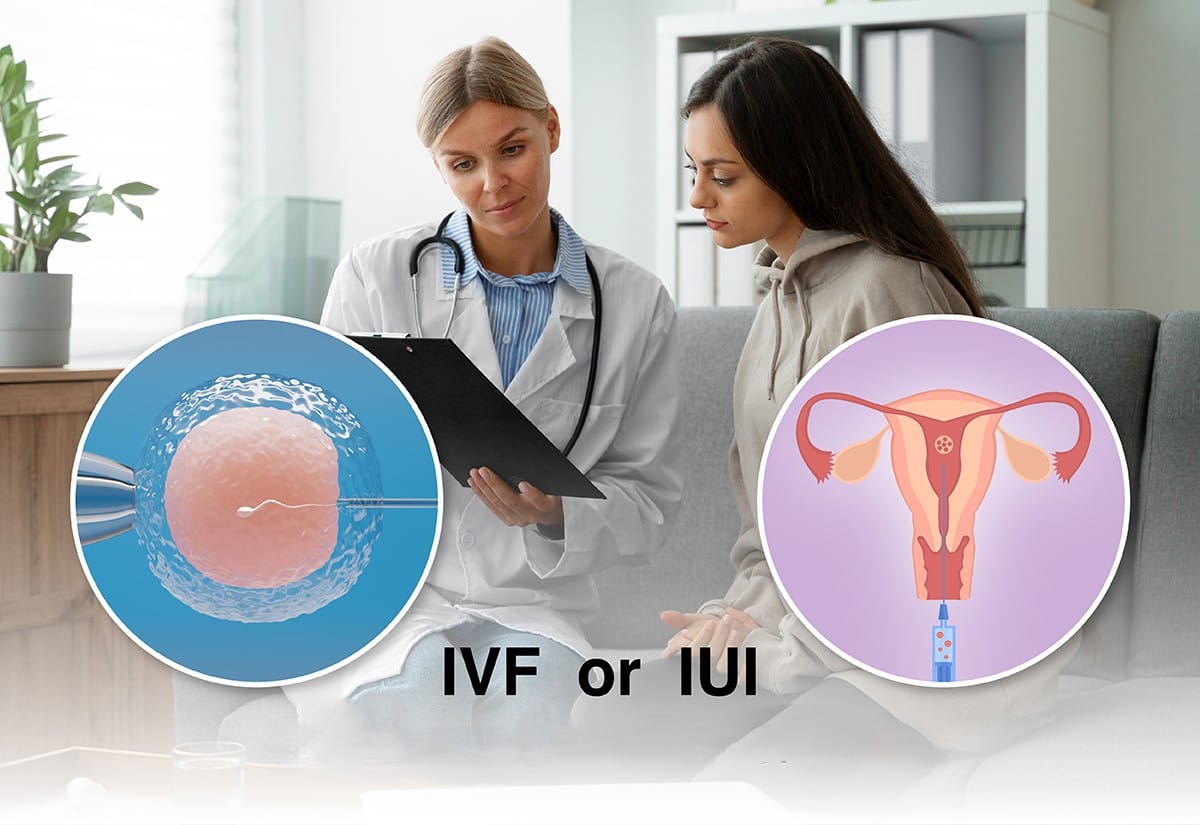
The moment a doctor says “you may need IVF,” the first thing most couples do — before they’ve even left the clinic — is quietly open their phone and search for the cost. Not because money is more important than hope. But because the financial reality of fertility treatment shapes everything that comes next: which clinic you choose, how many cycles you can realistically attempt, and whether this path is even possible right now.
Noida has become one of the more talked-about cities for IVF in North India, and the reasons aren’t complicated. Good hospitals, experienced specialists, proximity to Delhi, and prices that are noticeably lower than what you’d pay in Mumbai or Bangalore. But “lower cost” doesn’t mean straightforward, and the advertised number almost never tells the full story.
This guide breaks down what IVF actually costs in Noida, what drives the price up or down, and what you need to know before sitting across from a consultant who hands you a package brochure.
Quick Answer
The IVF cost in Noida typically ranges from ₹90,000 to ₹2,50,000 per cycle, depending on the clinic, treatment protocol, and whether additional procedures like ICSI, donor eggs, or genetic testing are required. Most basic packages start around ₹1,20,000 to ₹1,50,000 but often exclude medication costs, which can add another ₹60,000 to ₹80,000. Couples should budget for 1–3 cycles on average and always ask for a complete cost breakdown including hidden charges.
What IVF Is and Who It’s For
In vitro fertilization is a fertility treatment where eggs are retrieved from the ovaries, fertilized with sperm in a lab, and the resulting embryo is transferred back into the uterus. It bypasses the natural conception process entirely, which is why it’s used when other methods have failed or when the underlying issue makes natural conception unlikely.
The conditions that typically lead to IVF include blocked or damaged fallopian tubes, low sperm count or motility, endometriosis, polycystic ovarian syndrome (PCOS) that hasn’t responded to simpler treatments, unexplained infertility after years of trying, and cases where one or both partners carry genetic conditions and preimplantation genetic testing is needed.
Age is a significant factor too. Women over 35 often move toward IVF sooner because egg quality and ovarian reserve decline with time, and the window for successful treatment narrows.
IVF Cost in Noida: The Real Numbers
Let’s get into specifics, because this is what most people actually need.
Basic IVF cycle (self eggs, self sperm): ₹90,000 to ₹1,50,000
IVF with ICSI (Intracytoplasmic Sperm Injection): ₹1,20,000 to ₹2,20,000
IVF with donor eggs: ₹1,80,000 to ₹2,50,000 and above
Frozen Embryo Transfer (FET): ₹40,000 to ₹90,000 per cycle
Medications and stimulation injections: ₹60,000 to ₹80,000 additional — often not included in base packages
Diagnostic tests before starting: ₹10,000 to ₹20,000 for hormone panels, semen analysis, ultrasounds
Consultation fee: ₹2,000 to ₹5,000 per visit
These figures are consistent with what multiple Noida clinics publish and what patients report paying. The wide range exists because no two cases are identical — a woman with good ovarian reserve undergoing a basic cycle pays considerably less than someone who needs multiple medications, a donor program, or genetic screening of embryos.
What’s Usually Included in a Package — And What Isn’t
This is where couples frequently get surprised, and it’s worth spending some time here.
Most clinic packages include the ovarian stimulation monitoring (ultrasounds during the stimulation phase), egg retrieval procedure, embryo culture in the lab, and the embryo transfer procedure itself. Some include the initial consultation.
What’s commonly excluded — and what you need to specifically ask about — includes the fertility medications and hormone injections (this alone can add ₹50,000 to ₹80,000 depending on dosage and duration), cryopreservation of extra embryos, embryo storage fees charged annually, genetic testing of embryos (PGT-A or PGT-M), donor egg or sperm fees, and the costs of a frozen embryo transfer if the fresh cycle doesn’t result in pregnancy.
A clinic advertising an IVF package at ₹90,000 may be quoting the procedure cost alone. By the time medications, diagnostics, and a potential FET cycle are included, the real expenditure for one complete attempt is often ₹1,50,000 to ₹2,50,000.
Always ask: “What is the total out-of-pocket cost for one complete IVF attempt, including medications?” That question alone will reveal a lot about how transparent a clinic is.
Why Noida Is Genuinely Cheaper Than Other Metro Cities
Compared to Delhi, Mumbai, Hyderabad, and Bangalore, Noida consistently comes in lower for IVF pricing. This isn’t just clinic competition — it’s also a function of lower real estate and operational costs, which Indian private hospitals generally pass on to patients.
Delhi IVF prices for a basic cycle typically run ₹1,50,000 to ₹2,00,000. Mumbai and Bangalore often start at ₹1,75,000 and go considerably higher for premium clinics. Noida clinics offering the same technology and doctor caliber at ₹1,20,000 to ₹1,50,000 represent a genuine cost advantage.
For couples outside the NCR region who are traveling for treatment, Noida also offers a practical advantage over central Delhi — easier access from expressways, slightly lower accommodation costs, and a cluster of fertility clinics in relatively accessible locations.
The Success Rate Question
Cost is one thing. Whether the treatment actually works is another.
Success rates for IVF in Noida vary by clinic and by patient profile. Broadly speaking, for women under 35 with a good ovarian reserve, success rates per cycle at established clinics run between 50% and 70%. For women between 35 and 40, this drops to roughly 35% to 50%. Above 40, the rates fall further — typically 20% to 35% — and donor egg IVF becomes a more realistic path for many couples.
These are averages. A clinic quoting a 75% success rate without specifying the patient age group or treatment type is using a number that deserves scrutiny. Responsible clinics provide success rates broken down by age group and treatment type.
A slightly higher-cost clinic with a genuinely better success rate may be the more economical choice when you factor in the cost of failed cycles. A ₹1,50,000 cycle with a 60% success rate may cost less in total than three ₹1,00,000 cycles at a cheaper clinic with a 30% rate.
How the IVF Process Actually Works, Step by Step
Understanding the process helps contextualize where the costs come from.
It starts with a detailed evaluation — bloodwork, hormone levels including AMH (Anti-Mullerian Hormone, which measures ovarian reserve), ultrasound of the ovaries and uterus, and semen analysis for the male partner. This initial workup costs ₹10,000 to ₹20,000 and is essential regardless of which clinic you eventually choose.
Ovarian stimulation follows. Hormone injections are administered daily for 8–12 days to encourage the ovaries to develop multiple follicles. The clinic monitors progress with ultrasounds every 2–3 days. This is where the medication cost accumulates.
Egg retrieval is a minor surgical procedure performed under sedation. Eggs are collected from the follicles using a needle guided by ultrasound. The process takes about 20–30 minutes.
In the embryology lab, eggs are fertilized with sperm — either conventionally or through ICSI, where a single sperm is injected directly into each egg. Fertilized eggs are cultured for 3–5 days until they reach the blastocyst stage.
Embryo transfer involves placing one or two embryos into the uterus using a thin catheter. It’s generally painless and takes only a few minutes. A pregnancy test follows 10–14 days later.
If surplus embryos exist, they can be frozen for future use — which is where FET cycles come in if the first transfer doesn’t succeed.
Factors That Push the Cost Higher
Several situations increase the total cost beyond the base package:
Age over 35 — Higher medication doses are often needed. More monitoring cycles may be required. Multiple attempts become more likely.
Poor ovarian reserve — Women with low AMH levels may need higher stimulation doses and may produce fewer eggs per retrieval, reducing the number of viable embryos available.
Male factor infertility — ICSI adds to the base cost but is often medically necessary when sperm count, motility, or morphology is below normal levels.
Recurrent implantation failure — If embryos are not implanting despite good quality, genetic testing (PGT-A) may be recommended to identify chromosomally normal embryos. This adds ₹30,000 to ₹60,000 or more per testing cycle.
Donor programs — Donor eggs or donor sperm add a separate cost layer. Donor egg IVF in Noida typically runs ₹1,80,000 to ₹2,50,000 total, including the donor compensation and medical expenses.
Multiple cycles — Many couples require 2–3 attempts. Cumulative costs across multiple cycles are the honest financial picture for a significant portion of patients.
Safety and Realistic Risks
IVF is a well-established medical procedure with an extensive safety record when performed at accredited clinics under experienced embryologists. That said, it’s not without risks, and being informed matters.
Ovarian Hyperstimulation Syndrome (OHSS) is the most common concern. In mild forms, it causes bloating and discomfort and resolves on its own. In severe cases — which are less common — it requires medical attention. Reputable clinics monitor stimulation closely to minimize this risk.
Multiple pregnancies are a real possibility if more than one embryo is transferred. This increases the health risks for both mother and babies. Current best practice in many clinics is single embryo transfer where possible, which reduces this risk.
The emotional dimension is also real. Fertility treatment is physically demanding and emotionally exhausting. The two-week wait after each transfer is genuinely hard on couples. Having realistic expectations about timelines and success probabilities from the start makes the journey more manageable.
How to Choose a Clinic Without Getting Overwhelmed
A few practical criteria help cut through the noise:
Ask for their IVF success rates broken down by age group. Any clinic that can’t or won’t provide this information is a flag.
Visit the embryology lab if possible — or at least ask about it. The quality of the lab, the incubators, and the embryologist’s experience are arguably more important than the doctor’s reputation alone. The embryo spends 3–5 days in that environment.
Get a complete written cost estimate before agreeing to anything. Not just the base package — the total expected expenditure including medications, monitoring, and potential FET.
Check whether the clinic is registered and accredited. The Indian Council of Medical Research (ICMR) has guidelines for ART clinics, and accreditation under relevant bodies is a baseline requirement.
Ask how many cycles the clinic’s lead embryologist performs per year. Volume and experience in the lab correlate with outcomes.
Practical Opinion
The IVF cost in Noida is genuinely more accessible than in most Indian metros, and the quality of care at established clinics is comparable. But the single most important thing couples can do before committing to any clinic is to get a transparent, itemized total cost estimate — not the attractive headline number, but the full picture including medications, potential FET, and additional procedures.
Couples who walk in informed, ask the right questions, and choose based on transparent pricing and verifiable success rates are in a significantly better position than those who choose based on the lowest advertised price alone.
The financial investment in IVF is substantial. The emotional investment is even greater. Both deserve a clear-eyed, realistic approach from the start.
Final Verdict
Noida is a legitimate and cost-effective destination for IVF treatment in India. The combination of experienced specialists, modern embryology labs, and pricing that undercuts Delhi and other metros makes it a practical choice for couples across North India. What matters most is choosing a clinic with transparent pricing, verifiable success rates, and a lab that meets current standards — then budgeting realistically for the complete treatment journey, not just a single optimistic cycle.
Read our complete guide on IVF cost in Noida and know exactly what you will pay before starting your fertility journey.
FAQs
Q: What is the average IVF cost in Noida per cycle? A: A basic IVF cycle in Noida typically costs between ₹1,20,000 and ₹1,80,000 including standard procedures. Medications are usually charged separately and add ₹60,000 to ₹80,000. Advanced procedures like ICSI or donor egg programs cost more.
Q: Does IVF cost in Noida include medications? A: In most cases, no. The base package covers the procedure, monitoring, and lab work. Fertility medications and stimulation injections are charged separately and can significantly increase the total. Always ask specifically whether medications are included before comparing quotes from different clinics.
Q: How many IVF cycles does it typically take to get pregnant? A: Many couples conceive within the first 1–2 cycles, but 2–3 attempts are common depending on age and underlying factors. Success rates are highest for women under 35 and decline with age. This is why budgeting for multiple cycles from the beginning is practical financial planning.
Q: Is IVF covered by health insurance in India? A: Most standard health insurance policies in India do not cover IVF. Some newer policies offer partial coverage for diagnostic tests or specific procedures. A few insurers have begun offering limited IVF coverage — it’s worth checking your specific policy, but most couples pay out of pocket.
Q: What is ICSI and when is it needed? A: ICSI stands for Intracytoplasmic Sperm Injection. Instead of allowing sperm to fertilize eggs naturally in a dish, a single sperm is injected directly into each egg. It’s used when sperm count, motility, or morphology is below normal, or when previous IVF cycles had poor fertilization rates. It adds roughly ₹20,000 to ₹50,000 to the base cost.
Q: Are there EMI or payment plan options for IVF in Noida? A: Some clinics in Noida offer payment plans or no-cost EMI options through financial partners. It’s worth asking about this during the initial consultation. Planning ahead financially — rather than arranging funds urgently mid-treatment — reduces stress during an already demanding process.
Q: How does IVF success rate vary by age in Noida clinics? A: For women under 35, success rates at established Noida clinics run roughly 50–70% per cycle. Between 35–40, this drops to approximately 35–50%. Above 40, rates are typically 20–35% with own eggs, which is why donor egg IVF is often discussed for older patients. These are averages — individual results depend on ovarian reserve, sperm quality, and clinic standards.
Q: What should I ask before choosing an IVF clinic in Noida? A: Ask for their success rates broken down by age group, a complete itemized cost estimate including medications and potential frozen transfers, information about their embryology lab and embryologist’s experience, clinic accreditation status, and what happens financially if a cycle fails. A clinic that answers these questions clearly and without pressure is generally a better sign than one focused primarily on its headline price.
