

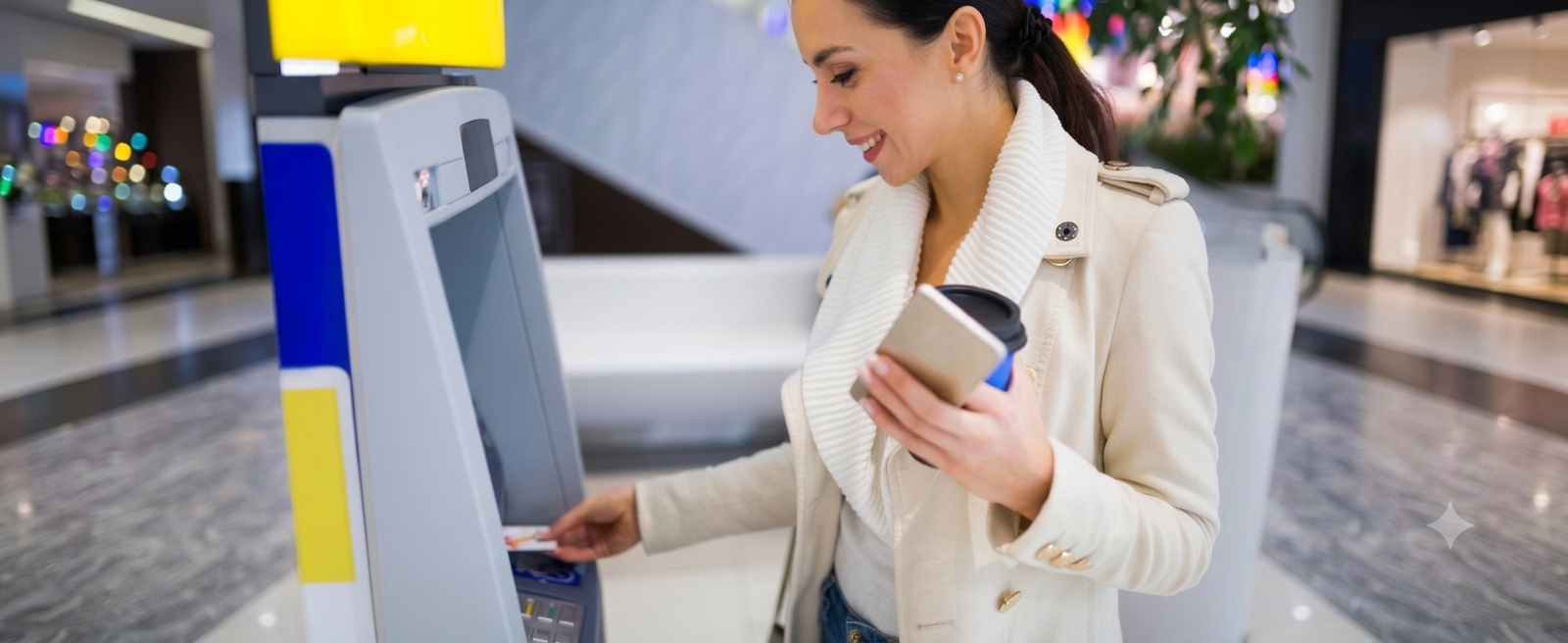
You’re standing inside a neighborhood convenience store late at night. Someone walks in, withdraws $40 from the ATM, pays a small service fee, and leaves within two minutes.
Most people never think about who owns that machine.
It might not belong to the bank at all. In many cases, it’s owned by an independent individual or a small company earning money from every transaction. That’s the basic idea behind a cash machine business—a business model that has existed for years but still attracts entrepreneurs looking for semi-passive income.
Like any business opportunity, though, it’s not as effortless as social media sometimes makes it sound. Success depends on choosing the right locations, managing cash efficiently, and understanding ongoing costs.
This guide explains everything you need to know before investing.
Quick Answer
A cash machine business involves owning and operating ATMs placed in locations such as convenience stores, gas stations, shopping centers, bars, hotels, and entertainment venues. The owner typically earns money from surcharge fees charged whenever customers withdraw cash. Profitability depends on transaction volume, machine placement, operating expenses, maintenance, and cash management.
What Is a Cash Machine Business?
At its core, this business model is surprisingly simple.
Instead of selling products or services directly, you own ATM machines and place them in businesses where customers frequently need cash. Every successful withdrawal generates a surcharge fee, and part or all of that fee goes to the ATM owner.
The business generally involves three parties:
- ATM owner
- Location owner
- Payment processor or ATM network
Customers use the machine just like any bank ATM. Behind the scenes, the processor handles authorization, while the ATM owner receives revenue from each completed transaction.
Many entrepreneurs start with just one machine before gradually expanding into multiple locations.
Featured Snippet
Is owning an ATM profitable?
Yes, it can be profitable if the machine is installed in a location with consistent foot traffic. Earnings mainly come from transaction surcharge fees, but profits vary depending on withdrawal volume, maintenance costs, cash replenishment expenses, and any revenue-sharing agreement with the business hosting the ATM.
How the Business Works
The overall process follows a straightforward cycle.
Step 1: Purchase an ATM
Owners either buy a new machine or purchase a refurbished model to reduce startup costs.
Step 2: Find a Location
The machine is placed in a business where customers regularly need cash.
Common examples include:
- Convenience stores
- Restaurants
- Bars
- Nightclubs
- Grocery stores
- Gas stations
- Laundromats
- Hotels
- Tourist attractions
- Shopping plazas
The location often receives a percentage of each surcharge as an incentive.
Step 3: Connect to a Processing Network
The ATM communicates securely with banking networks through a processing company that authorizes transactions.
Step 4: Fill the Machine With Cash
Unlike bank-owned ATMs, independent owners are responsible for stocking cash.
This means tying up working capital inside the machine.
Step 5: Earn Transaction Fees
Each withdrawal generates a surcharge.
For example:
- Customer withdraws $60
- ATM charges a $3 surcharge
- The customer pays $63 total
- The surcharge is distributed according to the owner’s agreement after processing costs.
Repeat this process hundreds of times each month, and the machine begins generating recurring income.
Main Features
Although different ATM providers offer different capabilities, most modern machines include:
- Cash withdrawals
- Balance inquiries
- PIN verification
- EMV chip card support
- Contactless payment compatibility on some models
- Remote monitoring software
- Electronic transaction reports
- Cash level monitoring
- Receipt printing
- ADA accessibility features
- Security locks
- Encrypted communications
Higher-end machines often provide real-time alerts when cash runs low or when maintenance is required.
Who Is This Business Best For?
Not every business model fits every entrepreneur.
This one tends to work best for people who:
- Want recurring revenue
- Already own retail locations
- Manage vending routes
- Operate convenience stores
- Own gas stations
- Have experience managing cash
- Prefer relatively low staffing requirements
Someone expecting effortless passive income may be disappointed.
Machines still require attention, maintenance, and occasional troubleshooting.
Startup Costs
One thing that surprises many beginners is the amount of cash required beyond purchasing the ATM itself.
Typical expenses include:
| Expense | Estimated Range |
| ATM Machine | $2,000–$8,000 |
| Installation | $200–$1,000 |
| Initial Cash Float | $2,000–$10,000+ |
| Insurance | Varies |
| Processing Setup | Varies |
| Maintenance | Ongoing |
| Internet Connection | Monthly |
| Merchant Commission | Depending on agreement |
The initial cash reserve often represents the largest hidden expense.
A machine that regularly empties during busy weekends isn’t making money until someone refills it.
What Determines Profit?
One ATM might process only 40 withdrawals per month.
Another might process 900.
Location makes almost all the difference.
Some important factors include:
Foot Traffic
More visitors usually mean more transactions.
Cash-Heavy Businesses
Bars, casinos, food trucks, flea markets, and festivals often generate stronger demand for cash withdrawals.
Nearby Competition
If three other ATMs are within a short walking distance, customers have alternatives.
Surcharge Pricing
Charging too little reduces revenue.
Charging too much may discourage customers.
Finding the right balance matters.
Real-World Examples
Convenience Store
A neighborhood convenience store without a nearby bank branch attracts regular ATM users throughout the day.
Customers buying snacks often withdraw cash first, benefiting both the store and the ATM owner.
Nightclub
Late-night entertainment venues frequently experience higher ATM demand because some vendors accept only cash.
Weekend traffic can significantly increase transaction volume.
Tourist Area
Visitors unfamiliar with local banking options often rely on independent ATMs.
Seasonal businesses sometimes generate much stronger earnings during holiday periods.
Laundromat
Although many laundromats now accept digital payments, some customers still prefer cash.
A well-placed ATM remains useful in certain neighborhoods.
Advantages
Several reasons explain why entrepreneurs continue entering this industry.
Recurring Revenue
Each successful withdrawal creates another earning opportunity.
Flexible Schedule
Owners aren’t required to operate a traditional storefront.
Scalable
Many operators eventually manage dozens of machines.
Limited Employees
Small operations often require little or no full-time staff.
Steady Demand in Certain Areas
Despite digital payment growth, cash remains important for many businesses.
Disadvantages
No business model comes without drawbacks.
Cash Management
Keeping machines stocked requires planning and transportation.
Theft Risk
Cash machines naturally attract criminals, making security extremely important.
Maintenance Costs
Printers, card readers, and cash dispensers occasionally fail.
Lower Usage in Cashless Areas
Some cities increasingly rely on mobile wallets and contactless payments.
Capital Requirements
Thousands of dollars may sit inside machines instead of being available elsewhere.
Safety, Security, and Privacy
One aspect many beginners underestimate is security.
Modern ATMs include multiple protective features such as:
- PIN encryption
- Tamper detection
- Secure communication protocols
- Locking vaults
- Anti-skimming technology on many models
Still, owners should take additional precautions.
These include:
- Regular inspections
- Strong insurance coverage
- Secure cash handling procedures
- Surveillance cameras where possible
- Trusted cash replenishment practices
If you’re managing several machines yourself, predictable refill schedules should generally be avoided for security reasons.
Is It Legitimate?
Yes.
Independent ATM ownership is a legitimate business model used worldwide.
However, legitimacy depends on following financial regulations, tax obligations, processor requirements, and local licensing rules where applicable.
Prospective owners should research regulations in their region before investing.
If an opportunity promises “guaranteed passive income” with no work involved, that’s a reason to ask more questions. Like any business, actual earnings depend on execution rather than marketing claims.
Common Challenges
After speaking with business owners and reading industry discussions, a few issues appear repeatedly.
Poor Location Choice
This is probably the biggest reason new operators struggle.
An expensive machine in a low-traffic area may barely cover operating costs.
Cash Flow Pressure
Money locked inside ATMs cannot easily be used elsewhere until customers withdraw it.
Growing too quickly can create cash shortages.
Machine Downtime
Every hour an ATM is offline represents missed transactions.
Routine maintenance matters more than many beginners expect.
Customer Complaints
Common issues include:
- Card retained
- Cash dispenser jams
- Receipt problems
- Network outages
Having responsive customer support improves trust with both customers and location partners.
How Does It Compare With Other Passive Income Businesses?
| Business Model | Startup Cost | Ongoing Work | Income Stability |
| ATM Ownership | Medium | Moderate | Location dependent |
| Vending Machines | Medium | Moderate | Product dependent |
| Laundromats | High | Moderate | Generally stable |
| Rental Property | High | Moderate | Tenant dependent |
| Dividend Investing | Varies | Low | Market dependent |
Each option has different risks.
ATM ownership stands somewhere between vending machines and small retail operations because cash management remains an active responsibility.
Practical Advice Before Investing
If someone asked me whether they should buy an ATM tomorrow, I’d suggest slowing down for a moment.
The machine itself isn’t the most valuable asset.
The location is.
I’ve seen entrepreneurs spend weeks comparing ATM models while spending only a few hours evaluating placement. That’s backwards. A basic machine in an excellent location can outperform a premium machine sitting in a quiet corner.
Before purchasing, consider:
- Visit potential locations at different times of day.
- Count customer traffic.
- Observe whether people already pay mostly with cards.
- Talk with the business owner about customer behavior.
- Estimate realistic transaction volume rather than optimistic projections.
- Understand all processing and maintenance fees.
Doing this homework can prevent expensive mistakes.
Is It Still Worth Starting Today?
Cash usage has declined in many places because of digital wallets and contactless payments.
Even so, cash hasn’t disappeared.
Many small businesses, entertainment venues, festivals, and independent retailers continue serving customers who either prefer or require cash.
Rather than asking whether ATMs are becoming obsolete, a better question is whether your target location still generates enough cash transactions to support one.
That answer varies widely from one neighborhood to another.
Final Verdict
Owning an ATM can become a reliable source of recurring income when it’s treated like a real business rather than a passive investment. Success depends far more on location quality, transaction volume, operational discipline, and cash management than on the machine itself.
For entrepreneurs willing to research locations carefully, maintain equipment, and manage cash responsibly, the model can still be worthwhile. Those expecting effortless profits with minimal involvement may find the reality more demanding than advertised.
The smartest approach is to evaluate local demand first, understand all operating costs, and build gradually instead of investing heavily from day one.
Explore More Blogs: dc-real-estate-tax
FAQs
Q: How much money can an ATM owner make?
A: Income varies depending on transaction volume, surcharge fees, operating costs, and location. A busy machine generally earns much more than one placed in a low-traffic area.
Q: Do I need a business license?
A: Requirements differ by country, state, and local regulations. Check with your local authorities before starting operations.
Q: Who fills the ATM with cash?
A: The owner or a professional cash management service typically replenishes the machine.
Q: Can I own just one ATM?
A: Yes. Many operators begin with a single machine to learn the business before expanding.
Q: Is ATM ownership passive income?
A: Not completely. While transaction fees can provide recurring revenue, owners still need to manage cash, maintenance, repairs, and location relationships.
Q: What is the biggest factor affecting profitability?
A: Location is usually the most important factor. High foot traffic and consistent demand for cash withdrawals generally have the greatest impact on long-term earnings.
