

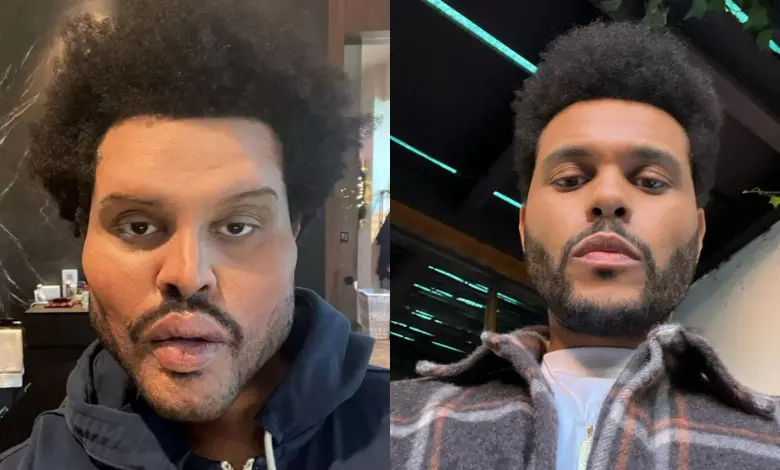
For a few weeks in 2021, it felt as though the internet had only one question: what happened to The Weeknd’s face?
His cheeks looked unusually raised, his lips seemed fuller, and his jaw had an exaggerated shape. The transformation was convincing enough to make people search for the weeknd plastic surgery and compare old photographs with scenes from his latest music video.
But the strange appearance wasn’t evidence of a real cosmetic procedure. It was part of a carefully planned visual story involving prosthetic makeup, bandages, celebrity culture, and the darker side of fame.
Did The Weeknd Actually Have Plastic Surgery?
There’s no reliable public confirmation that The Weeknd underwent surgery to create the dramatically altered face seen in the “Save Your Tears” music video.
That look was produced with prosthetics and special-effects makeup. Makeup artist Mike Marino and his team created separate pieces for the singer’s cheeks, chin, lips, nose, forehead, and eyebrows. Once applied and blended with makeup, the pieces gave him the appearance of extreme facial reconstruction.
So, the most famous the weeknd plastic surgery look wasn’t permanent. It was a costume — although calling it a costume almost feels too simple considering how realistic it appeared on camera.
The transformation worked because viewers had already watched his face change gradually during the After Hours era. It wasn’t dropped into one random video without context. There was a whole story leading up to it.
How the Rumors Started
The speculation didn’t begin with a normal red-carpet photograph. It grew through music videos and live performances in which The Weeknd, whose real name is Abel Tesfaye, appeared injured, bruised, or covered in bandages.
His red suit became a familiar part of the character. So did the increasingly damaged face.
The “Blinding Lights” Injuries
In the “Blinding Lights” video, The Weeknd appears with blood running down his face after a chaotic night in Las Vegas. He later showed up at public performances wearing similar makeup, allowing the fictional character to exist outside the music video.
This confused people who hadn’t followed the entire storyline. Someone catching only a short awards-show clip could easily assume he’d been involved in a real accident.
The Bandaged Performances
The story became even stranger when he appeared at the 2020 American Music Awards with his head wrapped in bandages. Instead of quickly explaining the look, he allowed the mystery to grow.
That was a clever move. The bandages became part of the conversation around After Hours, and fans started wondering what would be revealed underneath them.
During the 2021 Super Bowl halftime show, The Weeknd appeared without facial bandages, but his dancers wore them. By that point, the image had become a recognizable symbol of the album era.
The “Save Your Tears” Reveal
The biggest shock came in the “Save Your Tears” video. The bruises and bandages were gone, but the character’s face now looked heavily altered.
His cheekbones were oversized. His lips looked swollen, and his jaw appeared almost unnaturally sharp. The result sat somewhere between glamorous and unsettling — which seems to have been exactly the point.
The video continued the fictional journey that began in earlier After Hours visuals. The character hadn’t suddenly become a different person. Viewers were seeing the supposed result of the injuries, bandages, and reconstructive work suggested in previous performances.
What The Weeknd Said About the Bandages
Before his Super Bowl performance, The Weeknd explained that the bandages reflected what he saw as the absurd side of Hollywood celebrity culture. He connected the imagery to people changing themselves for superficial approval and validation.
He also described the visuals as a progression in which his character’s story became increasingly dangerous and ridiculous. That distinction matters. He was talking about a character rather than claiming that his own face had gone through the same journey.
The singer has often used uncomfortable visuals to support his music. Instead of explaining every idea immediately, he lets the audience sit with it. Some people find that frustrating. Personally, I think that uncertainty is one reason the campaign was so memorable. A neat explanation on day one would’ve killed half the conversation.
The Meaning Behind the Altered Face
The fake surgery wasn’t simply there to shock viewers. It supported several themes running through the After Hours era.
A Criticism of Celebrity Beauty Standards
Famous people live under constant visual inspection. A slightly different hairstyle, camera angle, or facial expression can lead to thousands of comments about their appearance.
The exaggerated face in “Save Your Tears” pushed that obsession to an uncomfortable level. The character seems to have changed himself in search of approval, yet the result looks disturbing rather than satisfying.
It’s hard not to see the irony. People were discussing whether he had changed his face while the performance itself was criticizing a culture obsessed with changing and judging faces.
The Need for Public Validation
The character wants to be seen, loved, and applauded, even when his behavior becomes destructive. The music video places him in front of a silent, masked audience that eventually claps for something deeply unsettling.
That audience can be read as a stand-in for celebrity culture. It watches everything but responds only when the spectacle becomes extreme enough.
Beauty Mixed With Horror
The Weeknd’s videos often make glamorous settings feel dangerous. Beautiful clothes, expensive rooms, bright lights, and catchy music sit beside blood, loneliness, or violence.
His fake cosmetic-surgery face fits that pattern perfectly. At first glance, the features resemble the polished look associated with celebrity beauty. Look for another second, though, and the proportions feel deliberately wrong.
Why So Many People Believed the Look Was Real
The special-effects work was remarkably convincing. Modern prosthetic makeup can change the shape of a person’s face without relying entirely on computer-generated effects.
But social media also played a huge role. A still image from the video circulated without its original context, and many users saw the transformation before watching “Save Your Tears.” When an image reaches someone through a meme or a short post, the fictional story behind it can disappear.
Celebrity surgery rumors already attract attention, too. People frequently compare photographs taken years apart while ignoring lighting, makeup, weight changes, facial expressions, lenses, and editing. Those comparisons may create entertaining posts, but they aren’t medical evidence.
Did His Face Return to Normal?
Yes, the extreme facial transformation disappeared because the prosthetics were temporary.
Photographs and performances after the release of “Save Your Tears” showed The Weeknd without the oversized cheeks, altered lips, and exaggerated jaw. That made the purpose of the look even clearer: it belonged to a particular character and chapter of his work.
He has continued experimenting with makeup and visual transformations in other projects. Still, a dramatic on-screen appearance shouldn’t automatically be treated as proof of a real medical procedure.
Find More Expert Content: Grant DuBose Injury
Why the Story Still Gets Attention
The original music video was released in January 2021, yet people continue searching for the weeknd plastic surgery years later. Part of that interest comes from how believable the prosthetics were. Another part comes from the fact that isolated photographs keep circulating online.
The campaign also arrived at a moment when public discussion about cosmetic procedures, filters, and unrealistic beauty standards was growing. His fictional transformation tapped into that conversation without feeling like a standard public-service message.
And, well, it was strange. Strange images tend to stick around.
A Performance People Mistook for Reality
The Weeknd’s altered face wasn’t simply a publicity stunt with no purpose behind it. It completed a visual journey that moved from reckless behavior and injury to bandages, reconstruction, and a deeply artificial appearance.
There’s no credible evidence that the “Save Your Tears” transformation came from actual surgery. The dramatic features were created with professional prosthetics as part of the singer’s After Hours character.
Perhaps the most interesting detail is how quickly viewers believed it. The performance criticized our fixation on celebrity appearances, and the immediate response was to inspect the celebrity’s appearance even more closely. That irony couldn’t have been planned much better.
Frequently Asked Questions
Did The Weeknd permanently change his face?
The exaggerated features shown in the “Save Your Tears” video were temporary prosthetics. His later public appearances showed that the dramatic transformation wasn’t permanent.
Why did The Weeknd wear facial bandages?
The bandages were part of the After Hours storyline. He explained that they also represented the absurdity of Hollywood culture and the pressure to alter oneself for approval.
Who created The Weeknd’s fake surgery look?
Prosthetic makeup artist Mike Marino and his team created the facial pieces used for the “Save Your Tears” transformation.
Was The Weeknd injured before the Super Bowl?
There was no confirmed real facial injury connected to the bandaged character. The bruises, blood, and bandages seen during that period were elements of his performance art.
Why did the dancers wear bandages at the Super Bowl?
The dancers helped carry the After Hours visual theme into the halftime show. Their matching red jackets and covered faces made the character’s imagery part of a much larger spectacle.
Is it possible that The Weeknd has had other cosmetic work?
Only The Weeknd and his medical professionals could reliably answer that. Online photo comparisons aren’t proof. What is confirmed is that the extreme face associated with “Save Your Tears” was created using prosthetic makeup.
Follow Us for More Informational Blogs
