

Picture this — your bathroom grout is crumbling, your kitchen cabinets are sagging on one side, and you’ve spent the last three weekends watching YouTube tutorials without actually doing anything. You need help. Real, reliable, show-up-on-time help. So someone in your neighborhood mentions a local service they’ve used. You search it up. And now you’re here, trying to figure out if Tim’s Home Improvement is actually worth calling.
Fair enough. Let’s get into it.
Quick Answer (Snippet-Optimized)
Tim’s Home Improvement is a home renovation and repair service that handles a wide range of residential improvement projects — from minor fixes like drywall patching and fixture installations to larger jobs like bathroom remodels, flooring replacement, and deck construction. It operates through a combination of skilled tradespeople and project-based pricing, serving homeowners who want professional results without going through large corporate contractors. Whether it’s the right fit depends on your project scope, location, and how much you value personalized service over brand-name familiarity.
What Is Tim’s Home Improvement?
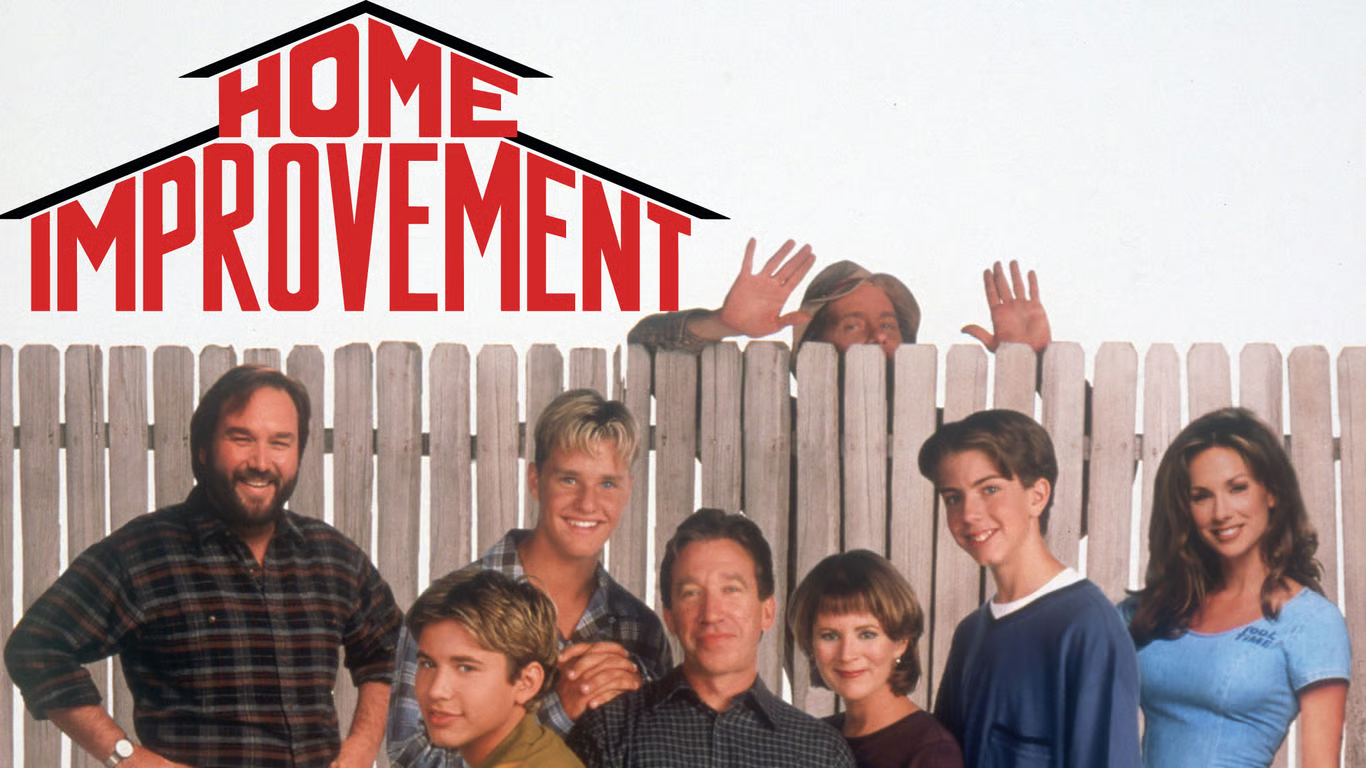
The name “Tim’s Home Improvement” might immediately bring to mind the classic 90s sitcom — and that’s not entirely unintentional. The name carries warmth, approachability, and a blue-collar reliability that big corporate renovation brands often can’t project.
In reality, Tim’s Home Improvement (as a service or brand) typically represents the kind of local, owner-operated contracting business that forms the backbone of the residential renovation industry. These businesses thrive on word-of-mouth, repeat customers, and community reputation. They’re not trying to compete with national chains on advertising spend — they’re competing on craftsmanship and trust.
Whether you’re looking at a specific local contractor using this name or a broader franchise or service network, the core offering is the same: getting real home improvement work done by experienced hands, priced fairly, and delivered without the corporate runaround.
It’s worth noting that “Tim’s Home Improvement” is a relatively common business name across different regions. If you’re researching a specific company, checking local reviews on Google, Yelp, or the Better Business Bureau will give you location-specific insight. This article covers the general profile of what businesses operating under this type of name offer, along with what to expect and watch for.
How Does It Work?
The process is usually straightforward, which is one of the appealing things about smaller home improvement operations.
Step 1 — Initial Contact You reach out by phone, email, or through a website contact form. Some businesses have moved to text-based quote requests or even WhatsApp. Response time varies — a well-run operation gets back to you within 24–48 hours.
Step 2 — On-Site Assessment For anything beyond minor repairs, a visit is typically scheduled so the contractor can see the space, take measurements, and understand the full scope of work. This is also your chance to ask questions and get a feel for whether you’re comfortable with this person working in your home.
Step 3 — Written Estimate A legitimate home improvement contractor provides a written estimate that breaks down labor, materials, and timeline. Verbal quotes alone are a red flag at any price point.
Step 4 — Project Execution Work is scheduled and carried out — either by the owner themselves or a small crew. Smaller operations often mean the person you spoke to is the person actually doing the work, which many homeowners genuinely prefer.
Step 5 — Walkthrough and Payment Once the job is done, a final walkthrough happens before payment is collected. Reputable contractors don’t pressure you into signing off before you’re satisfied.
Main Features and Services
Home improvement businesses operating under this profile typically offer:
- General repairs and handyman work — leaky faucets, broken doors, drywall damage, window caulking
- Kitchen and bathroom remodeling — cabinet replacement, tile work, vanity installation, backsplash
- Flooring installation — hardwood, laminate, vinyl plank, tile
- Painting — interior and exterior, including prep work and trim
- Deck and patio construction — new builds, repairs, staining
- Basement finishing — framing, insulation, drywall, lighting
- Carpentry and trim work — crown molding, wainscoting, built-ins
- Door and window replacement — installation and weatherproofing
The scope varies depending on licensing and crew size. A solo operator might handle everything up to mid-size remodels but subcontract electrical or plumbing. A slightly larger operation might have licensed subcontractors on call for exactly those trades.
Pros of Using Tim’s Home Improvement
Personalized attention. When you’re not dealing with a call center, project managers cycling through your job, and rotating crews, you get something that’s become surprisingly rare — someone who actually remembers your project and your preferences.
Honest pricing. Smaller contractors typically have lower overhead than large firms, which can translate to more competitive quotes. You’re not paying for a corporate marketing budget.
Flexibility. Need to change the tile color halfway through? Want to add a small shelf to the plan? Smaller operations can usually accommodate mid-project adjustments without layers of change-order bureaucracy.
Community accountability. A local contractor lives and works in the same community as you. Their reputation travels through neighborhoods, HOA groups, and local Facebook pages. That creates a real incentive to do good work.
Faster turnaround on small jobs. National contractors often have minimum project sizes or long waitlists. Local operations are much more willing to come out for a $300 repair that a larger company might not bother quoting.
Cons and Limitations to Know About
Inconsistent availability. Smaller operations get booked up fast — especially good ones. If you need something done in the next two weeks, you might be out of luck unless you book well in advance.
Variable licensing and insurance coverage. This is the big one. Not every contractor using a name like Tim’s Home Improvement carries full general liability insurance and proper state licensing. If someone gets hurt on your property and they’re not insured, that’s potentially your problem.
Limited capacity for large projects. A two-person crew is great for a bathroom remodel. A full kitchen gut-and-rebuild with custom cabinetry, structural changes, and new plumbing might be beyond what they can efficiently handle.
Less formal warranty structures. Large contractors often offer written workmanship warranties. Smaller operations may offer verbal guarantees that are harder to enforce if something goes wrong six months later.
Difficult to vet remotely. Without a substantial online presence, you’re relying heavily on referrals and whatever reviews exist. If the business is newer, that information might be thin.
Real-World Use Cases
The Weekend Project That Became a Weeklong Nightmare A homeowner starts pulling up old bathroom tile themselves and discovers the subfloor underneath is rotting. They call Tim’s Home Improvement on a Monday. By Thursday, the subfloor is replaced, new cement board is down, and tile work has begun. The kind of flexible, fast-response turnaround that a solo contractor can pull off — and that a large firm couldn’t schedule for three weeks.
The Aging Parent’s Home Modification A family needs grab bars installed, a walk-in shower conversion, and some non-slip flooring put in before a parent moves back in. This is exactly the kind of multi-trade, medium-scale project a good local contractor handles well — and where the personal relationship matters, because someone is entering a vulnerable person’s home.
The Investment Property Refresh A landlord needs a rental unit turned around between tenants — fresh paint, new kitchen hardware, patched walls, updated light fixtures. Fast, clean, reasonably priced. A local operation is often the most efficient choice for exactly this kind of work.
Safety, Legitimacy, and Trust: What to Verify
Before hiring any home improvement contractor — regardless of name — run through this checklist:
- Ask for their contractor license number and verify it with your state licensing board. Most states have an online lookup tool.
- Request a certificate of insurance for general liability and workers’ compensation. A legitimate contractor provides this without hesitation.
- Check Google and Yelp reviews — look for patterns across multiple reviews, not just the rating number. How do they handle problems? Do they respond to negative feedback professionally?
- Get everything in writing — scope of work, materials, timeline, payment schedule, and what happens if something goes over budget.
- Never pay 100% upfront. A reasonable deposit (10–30%) is normal. Full payment before work begins is a warning sign.
- Check if they pull permits. For structural work, electrical, and plumbing, permits aren’t optional — they’re required by law. A contractor who skips permits to “save you money” is actually creating serious liability for you as the homeowner.
Tim’s Home Improvement, as a type of local contractor, is generally legitimate — but doing basic due diligence protects you regardless of who you hire.
Common Problems Homeowners Run Into
- Scope creep without updated estimates. The job grows, the price grows, but nobody updated the written agreement. Prevent this by requiring a change order for anything beyond the original scope.
- Communication gaps mid-project. You’re not hearing updates, you don’t know when crews are coming, and your kitchen is half-demolished for days. Set clear communication expectations upfront.
- Material quality disputes. You assumed “tile” meant a certain grade. They installed the cheapest option. Always specify materials by brand, model, or grade in the written contract.
- Payment timing conflicts. They want full payment at delivery. You want to hold back until a final punch list is complete. Agree on this before work starts.
How It Compares to the Alternatives
| Option | Cost Level | Personalization | Speed | Reliability |
| Tim’s Home Improvement (local) | Low–Medium | High | Fast (small jobs) | Varies |
| National Contractor Chains | High | Low | Slow | Generally consistent |
| DIY | Lowest | Total control | Variable | Depends on skill |
| Handyman Platforms (TaskRabbit, Angi) | Medium | Medium | Fast | Inconsistent |
| Home Depot Install Services | Medium–High | Low | Medium | Consistent |
For small-to-medium residential projects where personal trust matters, a well-vetted local contractor beats most alternatives on the combination of cost and quality. The risk is higher variance — a great local contractor is better than any chain, but a bad one is worse.
Practical Opinion
Here’s an honest take: the appeal of Tim’s Home Improvement — or any business like it — is real, but it requires more homework than just calling the first number you find.
The best version of this experience is a contractor who shows up on time, communicates clearly, does clean work, and stands behind it. Those contractors exist. They’re often booked three months out because people won’t stop referring them.
The worst version is someone who takes a large deposit, disappears for two weeks, and leaves you with unfinished work and no easy legal recourse. That also exists.
The difference between those two outcomes almost always comes down to whether you did basic vetting before signing anything. Check the license. Read the reviews. Get the contract in writing. These aren’t complicated steps — they just require not being in a rush.
If someone came recommended by a neighbor who had actual work done — not just heard about them — that’s worth more than fifty five-star Google reviews from accounts that only ever reviewed one business.
Final Verdict
Tim’s Home Improvement represents something genuinely valuable in the home renovation space: accessible, personal, community-based contracting that doesn’t make you feel like a ticket number. For homeowners who take the time to vet their contractor properly, this kind of local service often delivers better results than larger, pricier alternatives.
The keyword is properly. Go in informed, get everything documented, and trust your gut during the initial consultation. If something feels off — vague answers about insurance, resistance to a written contract, pressure to pay upfront — walk away. There’s always another contractor.
But when you find the right one? You’ll be referring them to every neighbor you have.
Learn everything about Tim’s Home Improvement
Frequently Asked Questions
Q: What types of projects does Tim’s Home Improvement typically handle?
A: Most local contractors operating under this name handle a broad range of residential work — from minor repairs like drywall and fixture replacements to mid-scale remodels including bathrooms, kitchens, flooring, and decks. Very large structural projects or whole-home renovations may be beyond the capacity of a small operation.
Q: How do I know if Tim’s Home Improvement is licensed and insured in my area?
A: Ask the contractor directly for their license number and verify it through your state’s contractor licensing board website. Also request a certificate of general liability and workers’ compensation insurance. Any reputable contractor will provide both without issue.
Q: Is Tim’s Home Improvement a franchise or a local business?
A: “Tim’s Home Improvement” is a common name used by independent local contractors across different regions — it’s not typically a national franchise. If you’re researching a specific company, check their local business registration, Google Business profile, and Better Business Bureau listing for location-specific information.
Q: What should I include in a contract with a home improvement contractor?
A: Your contract should include the full scope of work, specific materials (brand, grade, color), total price and payment schedule, project start and completion dates, what happens if the project goes over budget, and warranty terms for workmanship. Never begin work without a signed written agreement.
Q: How much does home improvement work typically cost through a local contractor?
A: Pricing varies significantly by region, project type, and material choices. As a general reference, small handyman jobs might run $150–$500, a bathroom remodel could range from $5,000–$20,000+, and a kitchen renovation might start at $15,000 and go much higher depending on scope. Always get at least two or three quotes for comparison.
Q: What’s the biggest mistake homeowners make when hiring a contractor like this?
A: Paying too much upfront without a written contract. A reasonable deposit is normal, but full payment before completion — or a large portion paid before substantial work is done — creates serious leverage problems if issues arise. A written contract with a clear payment schedule tied to project milestones is the single most protective step you can take.
Q: Are online reviews reliable for evaluating a home improvement contractor?
A: Reviews are useful but need to be read critically. Look for detailed, specific reviews rather than one-line ratings. Check how the contractor responds to negative feedback — that tells you more about their professionalism than the five-star reviews do. And weight personal referrals from people you know more heavily than anonymous online ratings.
