

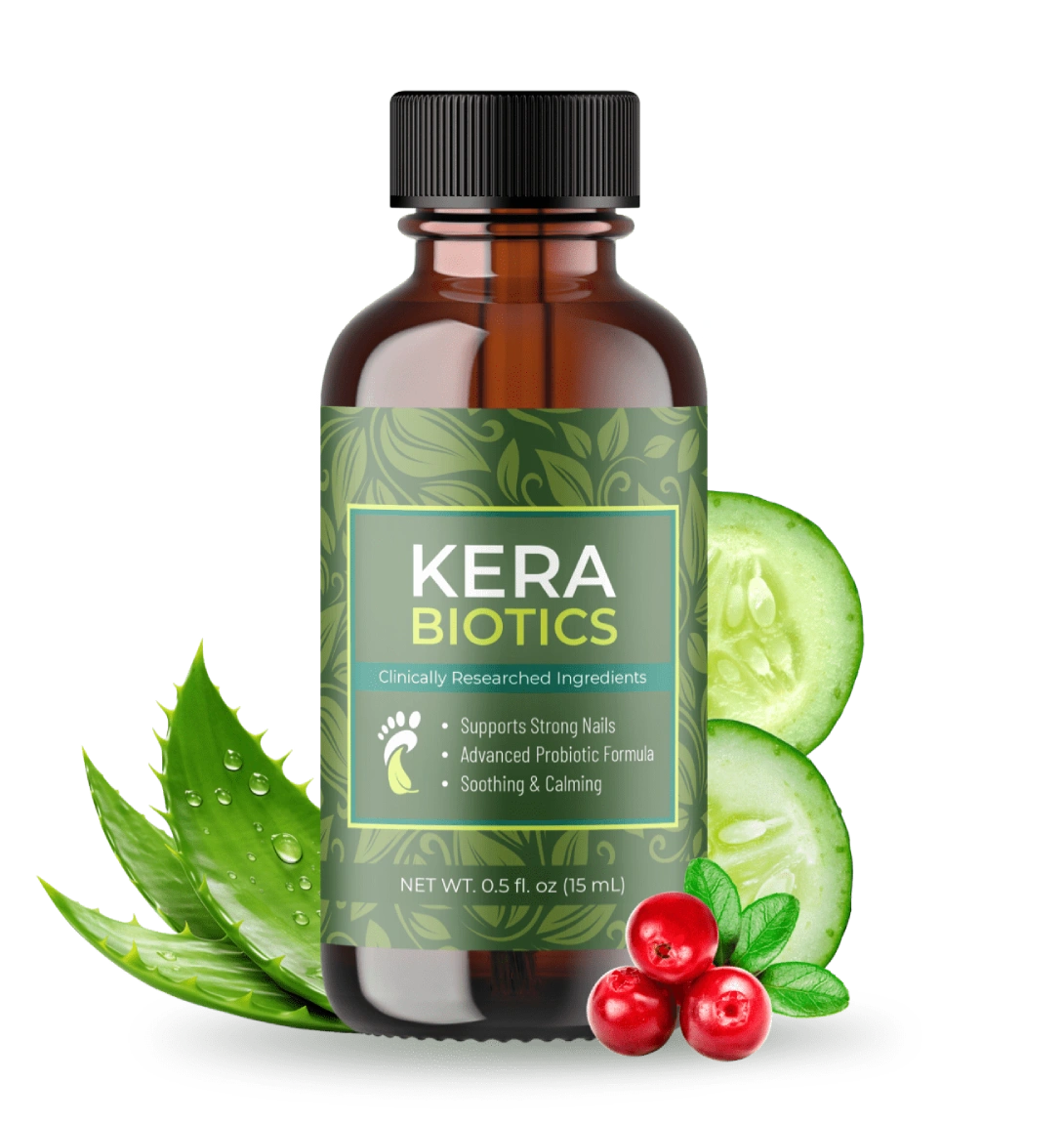
A friend of mine spent an entire dinner talking about her toenail. Not something you expect to come up over pasta, but she’d been hiding her feet in closed shoes for two summers because of a nail that turned yellow and never went back to normal. She’d tried the pharmacy creams, given up halfway through, and was now staring at an ad for something called KeraBiotics Colibrim, wondering if it was worth ordering.
That conversation is basically why this article exists. A lot of people land on this exact search — half curious, half skeptical — trying to figure out if this is a real solution or just another supplement ad dressed up as one.
The Short Version
KeraBiotics Colibrim refers to a probiotic-based topical nail formula sold through the Colibrim supplement marketplace, marketed mainly toward toenail fungus and general nail appearance concerns. It leans on probiotic strains and botanical extracts rather than standard antifungal chemicals. It’s reasonably safe as a cosmetic nail-care product, but there’s no solid clinical evidence it can treat an actual fungal infection on its own, so it’s best viewed as supportive care, not a medical treatment.
Breaking Down What It Actually Is
The name itself trips people up a bit. KeraBiotics is the product name. Colibrim is the retail and affiliate network that lists it, alongside a long roster of other wellness products — Kerafen, Kerassentials, NanoDefense Pro, Cardio Shield, and so on. So when someone searches “kerabiotics colibrim,” they’re often really asking two things at once: what does this product do, and is this website/seller actually trustworthy?
It’s sold as a liquid you apply directly to the nail and surrounding skin. The formula is built around probiotic bacteria strains, most commonly Lactobacillus rhamnosus and Bifidobacterium lactis, mixed with more familiar skincare ingredients: aloe vera juice, glycerin, cucumber extract, peptides, and copper gluconate. None of these are exotic or particularly risky — they show up constantly in skincare aisles for entirely different products.
What’s a little more unusual is the branding. The sales copy leans heavily on a story about an “ancient Amazonian barefoot tribal ritual” as inspiration. Take that with a grain of salt — it’s a storytelling device you’ll see recycled across several unrelated Colibrim-listed products, not a documented ingredient origin.
The Logic Behind How It’s Supposed to Work
The core idea is built on something dermatologists do actually study: the nail and surrounding skin have their own small microbial ecosystem, sometimes called the nail microbiome, similar in concept to the gut microbiome. When that balance shifts too far toward fungal organisms, nails can thicken, discolor, or become brittle — the visual markers most people associate with “nail fungus.”
KeraBiotics is positioned as a way to reintroduce beneficial bacteria to that environment, theoretically crowding out the fungal overgrowth and supporting healthier nail conditions over time, instead of using a harsh antifungal chemical to kill everything indiscriminately.
Here’s the honest caveat: the microbiome concept is legitimate science. Whether a topical liquid probiotic can meaningfully shift that balance enough to resolve an established fungal infection is a much bigger claim, and one that isn’t backed by published clinical trials specific to this product. That gap between “plausible mechanism” and “proven outcome” is worth keeping in mind before you get too excited about before-and-after photos.
What You’re Actually Getting
A few practical details worth knowing before buying:
- It’s a topical liquid, not a capsule — applied once or twice a day, usually with a small applicator or brush
- The formula is probiotic and botanical-based, avoiding standard antifungal actives like clotrimazole or terbinafine
- It’s marketed as gentle enough for daily use without the drying or irritating side effects some antifungal creams cause
- Pricing follows the typical bundle-discount model — buying multiple bottles drops the per-unit price noticeably
- There’s usually a refund window, commonly advertised around 60 days, though the fine print varies by which Colibrim storefront processes your order
Where It Helps and Where It Falls Short
What’s genuinely good about it:
- Ingredient list is transparent and made up of recognizable, generally well-tolerated components
- Low irritation risk compared to stronger prescription antifungals
- Easy to fit into an existing foot-care routine
- Might genuinely improve dryness, dullness, or minor cosmetic rough patches with consistent use
- Refund policy offers some protection if it doesn’t work out
Where it comes up short:
- No independent clinical trials confirming fungal infection treatment claims
- “FDA Approved” wording used on some pages is misleading — supplements aren’t FDA-approved; manufacturing in an FDA-registered facility is a different, much lower bar
- The product is spread across several near-identical Colibrim domains, which makes verifying the “official” seller more annoying than it should be
- Customer testimonials read suspiciously similar to each other across listings, a pattern typical of affiliate-driven sales pages
- Won’t be enough on its own for a moderate-to-severe fungal infection
Two Ways This Plays Out in Real Life
Think about someone whose toenails just look a bit neglected — dry, slightly dull, nothing medically concerning, just tired from a summer of flip-flops and pool chemicals. Applying something like KeraBiotics nightly could reasonably leave the nails looking a bit healthier within a few weeks. Realistically though, that improvement is probably coming from the aloe and glycerin doing basic moisturizing work, not from some deep microbiome overhaul.
Now picture someone else — a nail that’s gone thick and yellow-brown, starting to separate slightly at the edge, maybe with a bit of odor. That’s a textbook presentation of onychomycosis, a genuine fungal infection embedded in the nail bed. In that situation, a gentle topical probiotic is unlikely to cut it. These infections typically respond best to prescription-strength antifungal treatment, sometimes oral medication, and in stubborn cases, direct care from a podiatrist. Relying on a product like this alone, in that scenario, risks letting the infection get worse while you wait for results that may never come.
Knowing which category you’re actually in matters far more than any five-star review.
Is It Legit, Safe, and Worth Trusting?
Safety-wise, there’s nothing alarming in the ingredient list — this reads like a standard cosmetic skincare formula, not something with red-flag chemicals. As with any new topical product, patch-testing on a small area first is a smart habit, especially if you have sensitive skin or known plant-based allergies.
As for legitimacy as a business: it does appear to be a real, shippable product sold through an established affiliate marketing network, not a scheme that just takes your money and disappears. Where things get murkier is the marketing ecosystem around it — multiple lookalike domains, recycled brand storytelling reused across totally different products, and testimonial language that feels templated rather than organic. None of that automatically makes it a scam, but it’s the kind of pattern that should make you double-check the refund terms and buy small before committing to a six-bottle bundle.
Issues People Commonly Run Into
- Not knowing which Colibrim-branded site is the “real” or current official seller
- Expecting fast visible change, when nail growth is naturally slow — a toenail can take six to twelve months to fully regrow
- Treating it as a stand-in for medical treatment when symptoms clearly point to an active infection
- Refund requests taking longer or being more complicated than the marketing suggests
How It Stacks Up Against Other Options
KeraBiotics sits alongside similar Colibrim-marketed products like Kerassentials and NanoDefense Pro — all making broadly comparable “natural nail support” claims, none with strong independent research behind them. Choosing between them mostly comes down to ingredient preference and pricing, since the evidence gap is roughly the same across the category.
If the goal is actually treating a diagnosed fungal infection, over-the-counter options with proven active ingredients (like tolnaftate or clotrimazole) or a prescription-strength oral antifungal from a doctor remain the more clinically supported route. Those have decades of research behind them that products like KeraBiotics currently don’t.
A Practical, No-Spin Opinion
Products in this category tend to live in a gray zone, and I think that’s the fairest way to describe KeraBiotics Colibrim too. It’s not dangerous, and it’s not a total scam — but the marketing language (“revolutionary,” “eradicates fungus,” “ancient ritual”) outpaces what the actual ingredient list can realistically promise. Aloe and glycerin genuinely help with dryness. Topical probiotics are an interesting emerging idea in skincare, but “emerging” is very different from “clinically proven.”
If your concern is mostly cosmetic — nails that look a little rough or dull — this is a low-risk product to experiment with, and a modest improvement is plausible. If you’re dealing with a real, progressing fungal infection, don’t let a hopeful review talk you out of seeing a professional. Fungal infections rarely fix themselves, and delaying real treatment usually just makes the eventual fix harder.
Bottom Line
KeraBiotics Colibrim works best as a gentle, low-risk nail maintenance product rather than a genuine fungal infection cure. The ingredients are reasonable, the price bundling is standard affiliate-marketing practice, and the “miracle formula” language should be filtered out when deciding whether to buy. Patch-test it, keep your expectations realistic, save the receipt, and don’t skip a doctor’s visit if your nail looks like it’s genuinely infected rather than just tired.
Before you buy, see what our full KeraBiotics Colibrim review uncovered about ingredients and legitimacy.
FAQs
Q: Is KeraBiotics Colibrim actually FDA approved?
A: No. It’s not an FDA-approved product — dietary and topical supplements generally aren’t. Some listings mention manufacturing in an FDA-registered facility, which relates to production standards, not a stamp of approval on effectiveness.
Q: How quickly should I expect to see results?
A: Be skeptical of anything promising fast results. Toenails take roughly six to twelve months to fully regrow, so any honest evaluation of a topical nail product requires patience and consistent daily use over that timeframe.
Q: Can this actually cure toenail fungus?
A: There’s no independent clinical evidence confirming that. It may support nail appearance in mild, cosmetic cases, but a confirmed fungal infection generally needs a clinically proven antifungal treatment or professional care.
Q: Is KeraBiotics safe for sensitive skin?
A: The ingredients are generally mild and common in skincare, but anyone with sensitive skin or plant-based allergies should patch-test a small area before regular use.
Q: Why are there so many different Colibrim websites selling this?
A: The product is distributed across several Colibrim-branded domains and affiliate storefronts, each with potentially different pricing and refund terms. It’s worth confirming the specific policy on whichever site you’re buying from rather than assuming they’re all identical.
Q: When should I stop trying home remedies and see a doctor instead?
A: If your nail shows worsening discoloration, pain, lifting from the nail bed, spreading infection, or bleeding, it’s time to see a dermatologist or podiatrist rather than continuing to rely on a topical supplement alone.
