

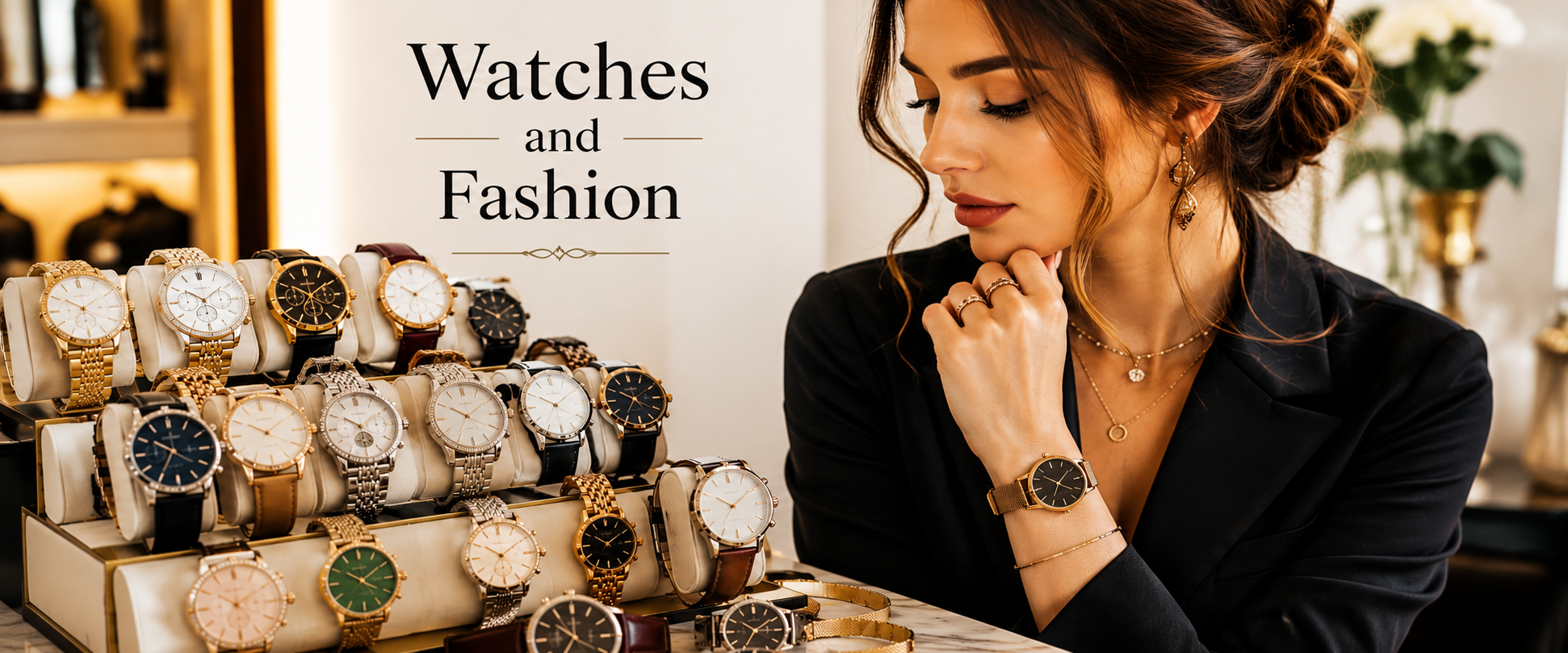
You can learn a surprising amount about someone by noticing what’s on their wrist.
Not because a watch defines personality. It doesn’t. But style choices often reveal priorities—minimal or bold, practical or expressive, understated or attention-grabbing. That’s probably why wristwear has survived smartphones, smart devices, and changing trends. It stopped being only about time years ago.
Today, style and timepieces overlap in ways that feel more personal than ever. People buy them for appearance, identity, utility, nostalgia, status, convenience—or sometimes simply because getting dressed feels unfinished without one.
This article explores the relationship between watches and fashion, how it works in real life, who benefits from paying attention to it, and whether investing thought (or money) into it is actually worthwhile.
Quick Answer
Watches remain relevant in fashion because they combine function with personal style. A well-chosen watch can support an outfit, communicate aesthetic preferences, and add balance to overall appearance. Whether someone chooses a mechanical model, minimalist design, luxury piece, or smartwatch, the value depends more on fit, lifestyle, and personal taste than price.
What Is Watches and Fashion?
At its simplest, this idea refers to how wristwatches interact with personal style and clothing choices.
That sounds obvious, but there’s more happening beneath the surface.
Fashion changes quickly. Watches move slower.
Clothing trends can shift every season, while a watch may stay in rotation for years. Because of that, people often use watches as anchor pieces—items that make different outfits feel consistent.
Think of watches as one of several visual signals that work alongside:
- Shoes
- Eyewear
- Jewelry
- Bags
- Belts
- Grooming choices
- Color coordination
Unlike many accessories, watches sit in a strange middle space: practical object, style statement, collectible item, and sometimes even emotional keepsake.
That combination is part of what keeps them relevant.
Why Watches Still Matter in Modern Style
A common question appears every few years:
“Why wear a watch when phones already tell time?”
Fair question.
Yet people still wear them—and not only expensive ones.
That’s because watches solve problems that smartphones never really replaced.
They create intentional style
A watch looks deliberate.
Even simple outfits often appear more complete when there’s a visible accessory.
They reduce dependency on phones
Checking the time without unlocking a screen sounds minor until you notice how often phones interrupt focus.
They carry emotional value
People inherit watches.
Celebrate milestones with watches.
Remember moments through watches.
A jacket gets replaced. A watch sometimes stays.
How Watches Influence Fashion Choices
Fashion is rarely about isolated items.
Most outfits work because individual pieces support each other.
Watches contribute through several mechanisms.
1. Scale and proportion
Large watches create visual weight.
Slim watches disappear more naturally into formal outfits.
Someone with smaller wrists may feel overwhelmed by oversized designs.
2. Material coordination
Common combinations include:
- Leather strap + leather shoes
- Stainless steel + silver jewelry
- Gold tones + warm color palettes
- Matte finishes + casual clothing
Perfect matching isn’t necessary anymore, but intentional coordination usually looks cleaner.
3. Style language
Every watch says something.
Examples:
- Minimal dial → clean and modern
- Chronograph → technical and sporty
- Skeleton design → expressive and mechanical
- Vintage style → nostalgic
- Smartwatch → functional and contemporary
Types of Watches and Their Fashion Roles
Dress Watches
Usually thin and simple.
Best for:
- Formalwear
- Business settings
- Weddings
- Elegant minimalism
Typical characteristics:
- Clean dial
- Leather strap
- Small to medium size
Potential downside:
Can feel too formal for casual outfits.
Casual Everyday Watches
Designed for flexibility.
Best for:
- Office use
- Daily wear
- Travel
- Mixed wardrobes
Strength:
Easy to style.
Weakness:
May not stand out.
Sports Watches
Built with function first.
Common features:
- Water resistance
- Durability
- Larger cases
- High visibility
Best for:
- Active lifestyles
- Streetwear
- Outdoor use
Potential issue:
Bulky proportions.
Luxury Watches
Luxury pieces introduce craftsmanship, heritage, prestige, and finishing.
People buy them for different reasons:
- Status
- Appreciation of mechanics
- Collection building
- Long-term ownership
Worth remembering:
Expensive does not automatically mean stylish.
Smartwatches
Smart devices changed the market dramatically.
Advantages:
- Notifications
- Health tracking
- Fitness monitoring
- Custom watch faces
Limitations:
- Charging
- Shorter product cycles
- More technology dependence
Main Features People Actually Care About
People often think watch enthusiasts obsess over tiny technical details.
Most buyers don’t.
These features usually matter more.
Design
First impression matters.
Questions people ask subconsciously:
- Does this feel like me?
- Can I wear this often?
- Will I get tired of it?
Comfort
An uncomfortable watch becomes drawer decoration.
Look at:
- Weight
- Strap material
- Case thickness
- Wrist size compatibility
Build Quality
Good signs include:
- Solid clasp
- Clear finishing
- Durable crystal
- Reliable movement
Versatility
Can one watch work with:
- Casual outfits?
- Work clothes?
- Events?
- Travel?
Versatility often beats uniqueness.
Pros and Cons
Benefits
- Improves overall appearance
- Adds personality without changing clothing
- Can become a signature accessory
- Useful beyond aesthetics
- Often lasts longer than trend-driven items
Drawbacks
- Quality models become expensive
- Fashion trends influence buying decisions
- Luxury purchases can become emotional spending
- Maintenance exists for mechanical pieces
Real-World Examples of How People Use Watches
Theory is nice.
Reality matters more.
Scenario 1: Office Professional
Someone wears neutral clothing most days.
Adding one elegant watch creates consistency without rebuilding the wardrobe.
Scenario 2: University Student
Budget matters.
A simple versatile watch makes everyday outfits feel intentional.
Scenario 3: Frequent Traveler
A durable everyday watch removes the need to coordinate accessories constantly.
Scenario 4: Creative Industry Worker
Unique designs become conversation starters.
Can Watches Improve Personal Style?
Short answer:
Sometimes.
Not automatically.
A good watch doesn’t rescue poor fit, uncomfortable clothing, or random styling choices.
But it can improve:
- Visual balance
- Outfit completeness
- Confidence
- Personal identity
There’s something interesting here.
People often notice watches after conversation starts—not before.
That delayed attention makes them powerful.
Safety, Privacy, and Legitimacy Considerations
Fashion advice rarely talks about this enough.
Counterfeit products
Fake watches remain common.
Red flags:
- Prices far below market expectations
- Missing documentation
- Unrealistic discount claims
Smartwatch privacy
Connected devices may collect:
- Location
- Activity data
- Usage behavior
Check:
- App permissions
- Data controls
- Account settings
Personal security
Visible luxury items may attract unwanted attention in certain environments.
Context matters.
Sometimes subtle choices are smarter.
Common Problems People Run Into
Buying for trends
People chase what looks popular online.
Months later, the excitement disappears.
Choosing oversized designs
Bigger doesn’t always look better.
Fit matters more.
Ignoring wardrobe compatibility
Buying an amazing watch that works with nothing else feels disappointing.
Confusing price with style
A thoughtful outfit with an affordable watch often looks stronger than expensive accessories with no cohesion.
Watches vs Other Fashion Accessories
Watch vs Bracelet
Watch:
- Functional
- Structured appearance
Bracelet:
- More decorative
- Layer-friendly
Watch vs Smart Device
Traditional watch:
- Longevity
- Craftsmanship
Smart device:
- Features
- Convenience
Watch vs Jewelry
Jewelry:
- More expressive
Watch:
- Blends utility with appearance
Many people combine both.
Building a Watch Collection Without Overspending
People often imagine collections require huge budgets.
Not true.
A practical approach:
Start with one versatile piece
Look for:
- Neutral colors
- Moderate size
- Everyday wearability
Add categories slowly
Example:
- Daily watch
- Dress option
- Sport or travel piece
Avoid impulse buying
If you still want it after several weeks, it’s usually a better sign.
Style Rules That Actually Help
Fashion rules became more relaxed.
Still, a few remain useful.
Match mood, not exact colors
You don’t need identical shades.
You want visual harmony.
Respect proportions
Slim outfit + huge watch often feels disconnected.
Prioritize comfort
Confidence usually follows comfort.
Ignore trend pressure
If you never enjoy wearing something, it doesn’t matter how fashionable it is.
Is This Trend Legitimate or Just Marketing?
That’s a fair concern.
Fashion industries benefit from making people feel incomplete.
But watches occupy a slightly different position.
They’ve remained relevant across generations.
That longevity suggests more than marketing.
Still:
Nobody needs a watch to be stylish.
The value appears when someone genuinely enjoys wearing one.
That distinction matters.
Practical Expert-Style Opinion
After looking across everyday wear, style trends, and real purchasing habits, one pattern appears repeatedly:
The best watch is rarely the most expensive.
It’s the one people keep reaching for.
That usually means:
- Comfortable
- Versatile
- Durable
- Visually balanced
Fashion works better when it feels natural instead of performed.
A watch should support your style—not become the entire personality.
Final Verdict
The conversation around watches and fashion is no longer about telling time.
It’s about expression.
A watch can sharpen an outfit, introduce personality, reduce dependence on phones, and create a stronger sense of identity through small details.
At the same time, not everyone benefits equally from owning multiple pieces or chasing luxury labels.
If you enjoy accessories, appreciate design, or want a reliable finishing touch, watches still offer real value.
If you don’t care about them, that’s valid too.
Fashion becomes more convincing when it reflects real preferences instead of expectations.
Learn More Blogs: fashion-reading-glasses
FAQs
Q: Are watches still fashionable today?
A: Yes. Watches remain relevant because they combine practicality with personal style and work across casual, professional, and formal settings.
Q: What type of watch works with most outfits?
A: A medium-sized watch with a neutral dial and simple strap usually offers the most versatility.
Q: Do expensive watches look better?
A: Not necessarily. Fit, design, and styling often matter more than price.
Q: Are smartwatches replacing traditional watches?
A: Smartwatches dominate convenience, but traditional watches remain popular for aesthetics, craftsmanship, and long-term ownership.
Q: How many watches does an average person need?
A: One well-chosen everyday watch is enough for many people. Collections become useful only if different situations justify them.
Q: Can watches improve confidence?
A: For some people, yes. Small accessories can create a stronger sense of completeness and personal expression.
Q: Is collecting watches a good investment?
A: Most watches should be treated as personal purchases first. Financial appreciation is unpredictable.
Q: What mistakes should beginners avoid?
A: Avoid trend chasing, poor fit, fake products, and buying pieces that don’t match everyday clothing.
