

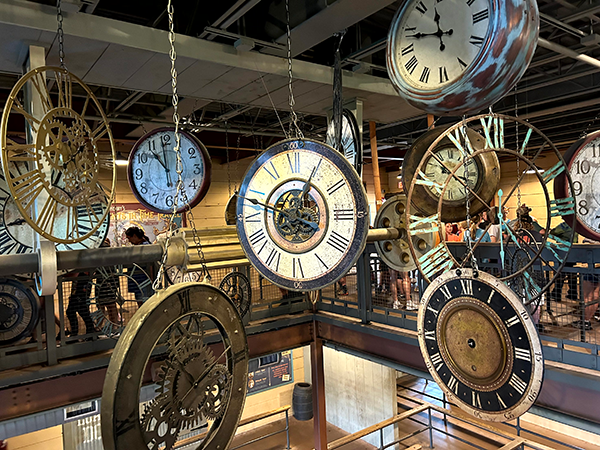
I’ll admit I almost skipped the line entirely the first time I visited Silver Dollar City, figuring a queue is a queue no matter which park you’re at. A friend who’d been before practically dragged me back, insisting the wait itself was part of the experience. She wasn’t exaggerating — by the time I reached the loading platform, I’d basically watched a mini story unfold three floors up, and that’s exactly the kind of detail people are trying to find when they search for the time traveler queue.
Quick Answer
The time traveler queue refers to the elaborately themed waiting line for the Time Traveler roller coaster at Silver Dollar City in Branson, Missouri — a spinning launch coaster that opened in 2018. Instead of a plain switchback line, the queue winds through a three-story building designed to look like a Victorian-era clock factory, telling the story of a fictional inventor named Charles Henry and his daughter as they build a time-traveling machine. It’s built for theme park visitors, coaster enthusiasts, and families who want more than just a place to stand while waiting for the ride.
What The Time Traveler Queue Actually Is
Most roller coaster lines exist purely to manage crowds. This one was clearly designed to be part of the ride experience itself, not just a holding pen before it. The queue building tells a layered story across three floors, following a clockmaker named Charles Henry and his daughter Emmaline as they progress from ordinary clockmaking toward inventing a device capable of manipulating time.
The first level is designed to look like the storage area of Henry’s clock factory, with props and signage inviting guests to imagine themselves as new employees of the business. Moving up to the second level, the theming shifts toward the factory’s offices, where visitors can see experimental clock components and props suggesting the early stages of the invention taking shape. By the third level, the story reaches its climax, revealing the time-traveling device just before guests board the ride vehicles themselves.
This layered structure means the queue functions almost like a walk-through attraction crossed with a waiting line — something that’s become more common at major theme parks but is still relatively rare for a regional park to invest in this heavily.
How It Works In Practice
The physical experience of moving through the queue follows a fairly deliberate design:
- Ground floor entry — guests enter through a themed archway leading into the reimagined clock factory storage area
- Second floor transition — the line moves upward into a recreated office space filled with sketches, notes, and mechanical props tied to the invention’s backstory
- Third floor reveal — the story culminates just before boarding, where the time-traveling device is finally shown in full
- Ambient design touches — moving gears, hanging clock components, and a steampunk-inspired aesthetic run throughout all three levels
- Musical score — an original soundtrack plays throughout the queue area, reinforcing the mood without feeling like generic background music
The overall effect is meant to build anticipation gradually, rather than leaving guests standing in a static line with nothing but rope barriers and directional signs to look at.
Main Features Worth Knowing About
- Three-story themed building rather than a simple outdoor switchback line
- Steampunk and Victorian-era visual design, including gears, sketches, and vintage clock props
- A layered narrative that guests can follow if they take the time to read the details along the way
- Custom musical score composed specifically for the attraction’s queue area
- Design work from the Weber Group, a theming company known for elaborate attraction storytelling
Pros And Cons
Pros:
- Turns waiting time into part of the overall entertainment experience rather than dead time
- Rewards attentive guests with a genuine storyline, adding replay value for repeat visits
- High production value theming that stands out compared to many regional park queues
- Helps distract younger or more anxious riders from pre-ride nerves with visual distractions
Cons:
- On very busy days, the story details are easy to miss entirely if the line is moving quickly
- Guests purely focused on the thrill of the ride itself may find the extended queue experience unnecessary
- Indoor queue sections can feel warm and crowded during peak summer visits
- The narrative isn’t narrated aloud, so guests who don’t actively read signage may miss the story altogether
Real-World Examples And Use Cases
Coaster enthusiasts visiting Silver Dollar City specifically for Time Traveler often mention taking their time through the queue on their first ride, then moving faster through it on repeat rides once they’ve already absorbed the story. That pattern makes sense — a themed queue like this rewards a slower pace at least once, even for visitors who’d normally rush straight to the loading platform.
Families visiting with younger children sometimes use the queue’s story and visual details as a helpful distraction before a fairly intense ride, since Time Traveler includes a steep drop, multiple inversions, and a spinning motion that can be intimidating for first-time riders. Giving nervous riders something engaging to focus on beforehand tends to ease pre-ride anxiety more effectively than standing in a plain line with nothing to look at.
On opening day in 2018, wait times reportedly stretched to roughly two and a half hours due to overwhelming demand and some early technical adjustments, giving guests plenty of time to fully absorb every detail of the queue’s storytelling, whether they wanted to or not.
Safety, Legitimacy, And Practical Considerations
There’s no legitimacy concern here in the way there might be with an unverified product or service — this is a well-documented, professionally designed attraction at an established, reputable theme park. That said, a few practical points are worth knowing before visiting:
- Ride restrictions apply — like most launch coasters with inversions, Time Traveler has height and size requirements, and testing the seat at the entrance is recommended for larger riders, since the fitted seating has been noted as a tighter fit for some guests
- Indoor sections can get warm — the multi-story queue building isn’t always heavily air-conditioned, so summer visits can be uncomfortable during long waits
- Mobility considerations — since the queue moves through a multi-level building, guests with mobility concerns should check with park staff about accessible routing options
- Technical delays are possible — early operational history included occasional short maintenance pauses, which is fairly standard for complex launch coaster technology generally
Common Problems And Limitations
The biggest limitation isn’t really about the queue’s design — it’s about pacing. On a slow day, the story unfolds beautifully. On a packed day, especially during peak summer or holiday weekends, guests often move through too quickly to catch more than a fraction of the details, which can make the elaborate theming feel like a lost opportunity for rushed visitors.
There’s also a language and literacy factor worth mentioning — since the story unfolds primarily through visual props and written signage rather than spoken narration, younger children or guests who don’t read English fluently may experience the queue as purely decorative rather than narrative.
Comparison With Alternatives
Compared to a standard outdoor switchback queue, which most regional theme park rides still use, the time traveler queue represents a significant step up in production value, closer to what’s typically seen at larger destination parks. Compared to fully immersive queue experiences at major parks like Disney or Universal, this queue is more modest in scale but still notably more ambitious than what most mid-sized regional parks invest in for a single attraction.
An Honest, Practical Opinion
Having gone through it myself, my honest take is that the queue genuinely elevates the overall ride experience, but only if you’re willing to slow down and actually look around instead of just shuffling forward while checking your phone. It’s clearly a labor of love from the design team, and that effort shows in small details most people probably walk past without noticing on a first visit.
If you’re someone who rides purely for the adrenaline and doesn’t care about backstory, you’ll still get through fine — the queue doesn’t force engagement. But if you’re the type who enjoys theme park theming as much as the rides themselves, this is one of the better examples you’ll find outside of the major destination parks.
Final Verdict
The time traveler queue is a genuinely well-designed, story-driven waiting experience built for the Time Traveler roller coaster at Silver Dollar City, and it’s a legitimate example of theme park design done thoughtfully rather than an afterthought. It’s most rewarding for visitors willing to take their time and notice the details, though busy days can compress the experience into a much quicker, less immersive walk-through. Either way, it’s a solid example of how a queue line can add genuine value to a park visit rather than just managing crowd flow.
Get the real story behind time traveler queue
FAQs
Q: How long does the Time Traveler queue take to walk through?
A: It varies significantly with crowd levels — on quieter days it can take just a few minutes, while peak-season waits have historically stretched over an hour or more.
Q: Is the Time Traveler queue story important to understand before riding?
A: Not necessary, but it adds context and atmosphere for guests who take the time to notice the details across the three-story building.
Q: Is Time Traveler suitable for young children?
A: The ride includes steep drops, launches, and inversions, so it has height and size restrictions, making it more suited to older children and adults comfortable with intense coasters.
Q: Is the queue indoors or outdoors?
A: The themed portion of the queue runs primarily through an indoor, multi-story building designed to resemble a Victorian-era clock factory.
Q: What park is the Time Traveler queue located at?
A: It’s located at Silver Dollar City in Branson, Missouri, home to the Time Traveler spinning launch roller coaster.
