

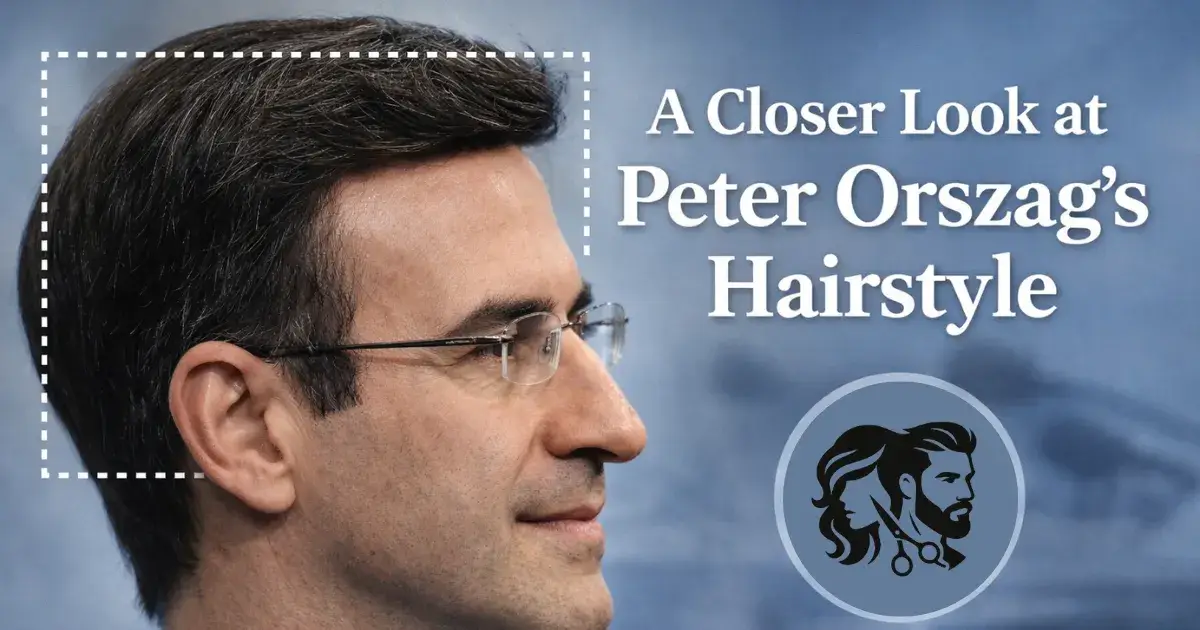
There’s something genuinely funny about the internet’s ability to take one of the most credentialed economists in America — a former White House budget director, current CEO of a major global investment bank — and turn a portion of his search traffic into questions about his hairline. But here we are. If you’ve searched peter orszag hair wondering whether it’s real, thinning, or something else entirely, you’re part of a surprisingly long-running, low-key internet phenomenon that says as much about televised public life as it does about Peter Orszag himself.
Quick Answer
Peter Orszag’s hair has become a recurring subject of online curiosity because he’s appeared on television constantly for nearly two decades — as CBO Director, Obama’s OMB Director, and now CEO of Lazard — and viewers have noticed his hairline changing across that long public record. Based on all publicly available evidence, there’s no verified confirmation that he wears a wig, toupee, or has undergone any hair restoration procedure. What’s actually happening is ordinary, age-related hair thinning, made more visible by studio lighting, camera angles, and the sheer volume of televised appearances he’s racked up since his mid-30s.
What Is the “Peter Orszag Hair” Search Trend, Exactly?
This isn’t a product, a service, or a tool — it’s a search phenomenon, the kind that develops organically when a public figure appears on camera often enough that small physical changes become noticeable to a wide audience over time. Orszag has been a fixture on Bloomberg TV, CNBC, CNN, and BBC for years, plus countless congressional testimonies and conference panels going back to his Congressional Budget Office days in 2007. That’s an unusually long, consistent video record for anyone, let alone an economist.
Somewhere along that timeline, viewers started noticing his hairline looked different than they expected, and a mix of genuine curiosity and social media joking took over. At least one broadcaster publicly commented on his hair appearing artificial during a CNBC segment, which is the kind of offhand remark that tends to snowball once it’s screenshotted and shared. From there, it became one of those search terms — half gossip, half genuine question — that keeps generating fresh content because the underlying curiosity never fully resolves.
How This Kind of Public Speculation Actually Develops
It helps to understand the mechanics here, because this pattern repeats constantly with public figures who spend a lot of time on camera. A person’s appearance changes gradually and naturally over years. Because television exposure isn’t continuous — people see someone in short clips spread across a decade rather than watching the change happen day by day — those gradual shifts can look sudden or unusual when comparing older footage to recent appearances.
Add in studio lighting, which can either flatten hair or expose thinning spots depending on angle and brightness, and you get exactly the kind of visual inconsistency that fuels “is it real” speculation. None of this is unique to Orszag — it’s the same pattern behind wig and hair-transplant rumors about countless public figures, politicians, and news anchors.
Main Features of the Coverage Around This Topic
Looking at how this topic gets covered across various sites and social posts, a few consistent elements show up:
- Direct address of the “bald or wig” question, almost always concluding there’s no verified evidence of cosmetic hair intervention
- Explanation of natural aging patterns, noting that mild, age-related thinning is extremely common for men in their late 50s
- Discussion of his consistent “Wall Street executive cut” — a short, conservative, side-combed style shared by many finance and policy leaders
- Context about his extensive television history, which explains why there’s simply more visual material to scrutinize compared to most professionals
- Occasional social media commentary, including at least one on-air remark from a broadcaster that helped fuel the speculation further
Pros and Cons of Engaging With This Kind of Content
What’s genuinely useful about it:
- For anyone who stumbled on the speculation and wants a factual answer rather than more rumor, most detailed coverage does land on a clear, evidence-based conclusion: no confirmed wig or hair transplant, just ordinary thinning
- It’s a mildly interesting window into how media exposure shapes public perception of physical appearance over time
What’s worth being cautious about:
- A lot of the content repeating this topic reads as generated or templated, recycling the same phrases and conclusions across many different sites
- Speculating about someone’s cosmetic choices, even a public figure, edges into territory that’s more gossip than substantive journalism
- None of this has any actual bearing on Orszag’s professional record or expertise, and treating it as meaningful commentary risks distracting from the parts of his career that are genuinely significant
I’ll be honest about my own take here: there’s a version of this curiosity that’s harmless — people notice changes in someone who’s been on their TV screen for twenty years, and that’s just human pattern recognition. But it’s worth remembering that this is someone’s actual physical appearance being publicly dissected by strangers, which is worth a little perspective even when the person in question is a high-profile CEO.
Real-World Context: Who Is Peter Orszag, Actually?
For context, since the hair questions tend to overshadow it: Peter Richard Orszag is an economist who directed the Congressional Budget Office from 2007 to 2008, then served as President Obama’s Director of the Office of Management and Budget from 2009 to 2010, playing a central role in the administration’s response to the financial crisis and early healthcare policy debates. He later moved into investment banking and is now CEO and Chairman of Lazard, one of the world’s most prominent financial advisory firms. He’s a regular contributor to Bloomberg Opinion and a frequent guest on major business news networks, which is precisely why his on-camera appearance has become so familiar to so many people over such a long stretch of time.
Safety, Legitimacy, and What to Actually Trust
There’s no safety concern here in the traditional sense, but there is a legitimacy question worth addressing directly: none of the available reporting includes any confirmed statement from Orszag himself, his representatives, or a credible medical source verifying or denying cosmetic hair procedures. Every conclusion floating around online is based on visual analysis of public photos and video, not confirmed fact from the source. That’s an important distinction — “no verified evidence of a wig” is different from “confirmed natural hair,” even though the practical takeaway lands in a similar place.
Common Problems With How This Topic Gets Covered
A few recurring issues show up across the available content:
- Many articles present speculation and conclusions with more confidence than the underlying evidence actually supports
- The repetitive nature of the coverage, often reusing nearly identical phrasing across different sites, suggests a good portion of it is SEO-driven content rather than original reporting
- Genuinely substantive context about Orszag’s actual career achievements often gets buried under the appearance-focused framing
An Honest, Practical Take
If you’re genuinely curious rather than just looking for gossip, the most defensible conclusion based on everything publicly available is straightforward: normal, age-related hair thinning, made more visible by two decades of consistent television exposure, with no confirmed evidence of any cosmetic intervention. Anything beyond that is speculation dressed up as certainty, and it’s worth treating it that way regardless of how many articles repeat the same claims.
Final Verdict
The peter orszag hair search trend is a fairly ordinary example of how sustained media exposure turns small physical changes into internet curiosity, amplified by social media commentary and a steady stream of SEO content recycling the same unverified conclusions. There’s no confirmed evidence of a wig, toupee, or hair transplant — what’s actually visible across two decades of public appearances is consistent with normal aging. It’s a mildly interesting cultural footnote, but not something that reflects on, or should distract from, Orszag’s substantial career in economic policy and finance.
Expand Your Knowledge: For his full career background and professional achievements beyond the appearance speculation, Peter Orszag’s official Lazard bio is worth checking out.
FAQs
Q: Does Peter Orszag wear a wig or hairpiece?
A: There’s no verified evidence confirming this; publicly available photos and video are consistent with natural, age-related hair thinning rather than a confirmed hairpiece or wig.
Q: Is Peter Orszag bald?
A: No, he’s not bald in a complete or clinical sense — he shows mild thinning typical of many men in their late 50s, but retains visible hair across his scalp.
Q: Why does Peter Orszag’s hair get talked about online so often?
A: His two-decade-long history of frequent television appearances, from his Congressional Budget Office days through his current role as Lazard’s CEO, has given viewers an unusually large amount of visual material to notice changes in over time.
Q: What does Peter Orszag do for a living?
A: He is the CEO and Chairman of Lazard, a major global investment bank, and previously served as Director of the Congressional Budget Office and Director of the Office of Management and Budget under President Obama.
Q: Has Peter Orszag ever addressed the hair speculation directly?
A: No confirmed public statement from Orszag or his representatives directly addressing the speculation appears in available reporting, meaning all existing commentary is based on visual analysis rather than a confirmed source.
