

The first time I ran an ELISA assay as an undergrad, I spent almost as long labeling tubes and drawing grids on scratch paper as I did actually pipetting samples. My supervisor eventually handed me a printed grid sheet and said, “just use this next time.” That small piece of paper probably saved me an hour a week for the rest of the semester, and it’s exactly the kind of unglamorous tool that a 96 well plate template turns out to be.
Quick Answer
A 96 well plate template is a pre-formatted grid layout, usually available as a printable PDF, spreadsheet, or digital lab notebook file, that mirrors the 8-row by 12-column arrangement of a standard 96 well microplate. It’s used to plan and record where samples, controls, and reagents go before or during an experiment, helping researchers avoid mislabeling wells during assays like ELISA, PCR, cell culture, or serial dilutions.
What A 96 Well Plate Template Actually Is
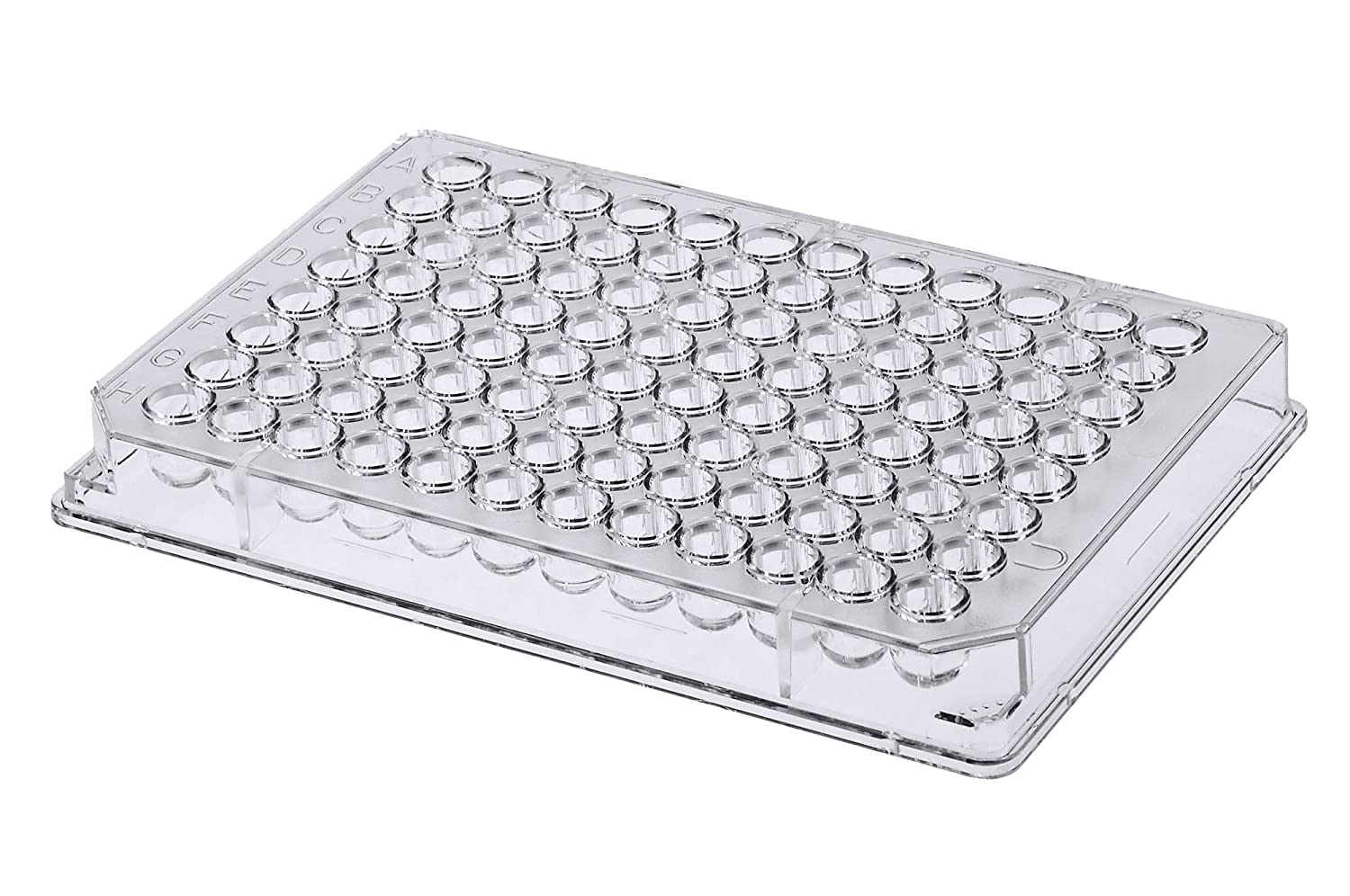
Anyone who’s worked in a molecular biology, microbiology, or clinical lab has probably encountered a 96 well plate at some point — a small rectangular tray with eight rows (A through H) and twelve columns (1 through 12), giving exactly 96 individual wells for holding tiny liquid samples. The plate itself is standardized across most manufacturers, which is part of why templates built around this exact layout have become so widely used.
The template is essentially a mapping tool. Before running an assay, researchers need to know exactly which well contains which sample, standard, control, or reagent. Trying to track that mentally, or scribbling it on random paper, is a recipe for mistakes — and in a lab setting, a mislabeled well can mean a wasted sample, a failed experiment, or in clinical contexts, a genuinely serious error. A template solves that by giving a consistent, labeled grid to fill in ahead of time.
How It Works In Practice
Using a 96 well plate template is straightforward, but the value comes from consistency rather than complexity:
- Pre-experiment planning — before touching a pipette, researchers fill in the template with sample IDs, standards, and controls in the exact positions they’ll be pipetted into
- Dilution series mapping — templates are especially useful for serial dilutions, where concentration typically decreases moving across a row, and keeping that pattern visually clear prevents mix-ups
- Digital or printed use — some labs print a physical copy to keep next to the plate during pipetting, while others use a spreadsheet version linked directly to a plate reader’s software
- Data recording after the run — many templates double as a place to log raw absorbance or fluorescence readings after the assay, keeping the layout and results tied together in one document
- Standardized documentation — having a consistent template format across a lab also makes it much easier for colleagues to interpret someone else’s experiment later, since everyone’s using the same visual language
For labs running plate reader software, some templates are built to directly import into or export from that software, cutting out a manual data transcription step that’s historically been a common source of small errors.
Main Features Worth Knowing About
- Standard 8×12 grid layout matching the physical arrangement of a real 96 well plate
- Editable digital formats, typically available as Excel, Google Sheets, or fillable PDF files
- Color-coding options in many templates, useful for visually separating sample types, replicates, or concentration groups
- Built-in labeling conventions, following the standard A1 through H12 well-naming system used across most lab software and equipment
- Compatibility with common assay types, including ELISA, qPCR, cell viability assays, and serial dilution protocols
- Print-friendly versions, useful for benchtop reference during manual pipetting
Pros And Cons
Pros:
- Significantly reduces the risk of sample mix-ups during setup
- Speeds up experiment planning, especially for repeated or high-throughput assays
- Improves lab documentation and reproducibility, since layouts are easy to review later
- Free, widely available templates exist for nearly every common assay type
- Easy to customize for lab-specific protocols or naming conventions
Cons:
- A template alone doesn’t prevent pipetting errors — it only prevents planning errors
- Poorly designed or overly generic templates can be harder to adapt for non-standard assay layouts
- Digital templates require some basic spreadsheet literacy to customize effectively
- Physical printouts can get smudged or misplaced during a busy bench session if not handled carefully
Real-World Examples And Use Cases
In a typical ELISA workflow, a researcher might use a template to lay out duplicate or triplicate samples across specific columns, standards in a dedicated row for the calibration curve, and blank wells positioned deliberately to catch background signal. Having that plan mapped out on a template before starting pipetting makes the actual bench work considerably faster, since there’s no hesitation about where the next sample goes.
In diagnostic and clinical testing labs, standardized plate templates are often built directly into lab information systems, linking patient sample IDs to specific wells automatically to reduce transcription errors — a genuinely important safeguard given the consequences of a mislabeled clinical sample.
Academic labs running qPCR experiments frequently use templates to track technical replicates and no-template controls, since these assays often involve dozens of small variations across a single plate that would be nearly impossible to track reliably from memory alone.
Safety, Privacy, And Legitimacy
There’s no inherent safety or credibility controversy tied to plate templates themselves — this is a well-established, standard tool used across academic, clinical, and industrial labs worldwide. A few practical considerations are still worth knowing:
- Template accuracy matters — a template that doesn’t match the exact well-numbering convention used by your specific plate reader software can cause confusion, so double-checking compatibility before relying on a new template is worth the extra minute
- Clinical and regulated environments often require validated, standardized templates as part of quality control procedures, so a downloaded free template may need review or approval before use in a regulated diagnostic setting
- Data privacy becomes relevant specifically in clinical contexts, where templates containing patient sample identifiers need to follow the same data protection standards as any other patient record
- Free online templates are generally safe to use, though it’s sensible to source them from reputable lab supply companies, university resources, or established scientific software providers rather than obscure, unverified sites
Common Problems And Limitations
The most common mistake isn’t choosing a bad template — it’s failing to double-check the template against the actual plate orientation before starting. A template flipped or mismatched with how the plate is physically oriented on the bench can undo all the planning benefit it was supposed to provide.
Templates also can’t account for every assay’s unique quirks. Highly customized protocols, particularly in specialized research settings, sometimes need a modified template built from scratch rather than relying on a generic downloaded version.
There’s a documentation gap worth mentioning too — a template only helps if it’s actually filled out consistently and kept alongside the experiment’s other records. A beautifully organized template that gets tossed after the assay defeats much of its long-term value for reproducibility.
Comparison With Alternatives
Compared to manually sketching a grid by hand, a proper template is faster, more consistent, and far less prone to transcription errors, especially across repeated experiments. Compared to relying entirely on plate reader software without any separate planning document, a standalone template gives researchers a clearer, more portable record that isn’t locked inside proprietary lab software, making it easier to share with collaborators or reference later.
An Honest, Practical Opinion
Having spent a fair amount of time at the bench myself, my honest opinion is that a good 96 well plate template is one of those unglamorous tools that quietly prevents a disproportionate number of avoidable mistakes. It won’t fix a shaky pipetting technique or a poorly designed assay, but it removes an entire category of error that has nothing to do with actual scientific skill and everything to do with simple bookkeeping under time pressure.
Where I’d encourage some caution is in treating any single downloaded template as universally correct. Labs vary in naming conventions, replicate structures, and software requirements, so a bit of customization up front tends to save more headaches than blindly using a generic version straight out of the box.
Final Verdict
A 96 well plate template is a genuinely practical, low-risk tool used widely across research and clinical labs to reduce sample mix-ups and improve documentation consistency. It’s most useful for anyone running repeated assays like ELISA, qPCR, or serial dilutions, and it pairs well with existing lab software rather than replacing it. The main caution is making sure the specific template matches your plate orientation and lab’s naming conventions before relying on it for anything beyond casual planning.
Get the real story behind 96 well plate template
FAQs
Q: What is a 96 well plate template used for?
A: It’s used to plan and record the position of samples, controls, and reagents on a 96 well microplate before and during an experiment, reducing the risk of mislabeling.
Q: Are 96 well plate templates free to download?
A: Yes, many reputable lab supply companies, universities, and scientific software providers offer free templates in Excel, PDF, or Google Sheets format.
Q: Can a template be used for any assay type?
A: Most templates can be adapted for common assays like ELISA, qPCR, and serial dilutions, though highly specialized protocols may require a customized layout.
Q: Do plate reader machines require a specific template format?
A: Some do, particularly if data needs to be imported directly into plate reader software, so it’s worth checking compatibility before relying on a generic downloaded template.
Q: Is a printed template better than a digital one?
A: Both have advantages — printed templates are convenient for bench-side reference during pipetting, while digital templates are easier to store, share, and link directly to recorded data.
