

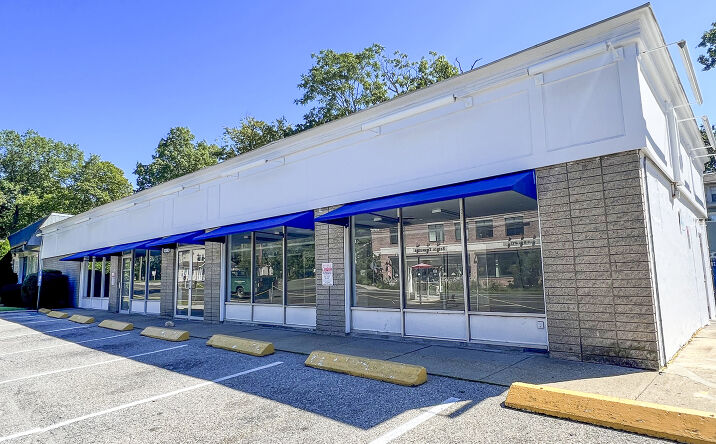
You’ve been running your business out of a cramped office for two years. Or maybe you’ve got capital sitting in a savings account earning almost nothing and someone at a dinner party mentioned that Connecticut’s commercial property market is quietly heating up. Either way, you’re here — trying to figure out whether commercial real estate CT is worth your time, your money, or both.
Good instinct to research first. This market has real opportunity, but it also has enough moving parts that going in without understanding the landscape can cost you significantly.
Let’s break it down honestly.
Quick Answer (Snippet-Optimized)
Commercial real estate CT refers to income-producing or business-use properties located across Connecticut — including office buildings, retail spaces, industrial warehouses, multi-family apartment complexes, and mixed-use developments. Connecticut’s commercial property market is shaped by its proximity to New York City, a strong healthcare and financial services sector, and a mix of urban centers like Hartford, Stamford, and New Haven alongside suburban and rural corridors. It suits investors, business owners, and developers who want exposure to a stable Northeast market with diverse property types and relatively accessible entry points compared to Manhattan or Boston.
What Is Commercial Real Estate CT?
Commercial real estate (CRE) is any property used primarily for business purposes or investment income — as opposed to residential real estate, which is where people live. In Connecticut, this covers a wide spectrum:
- Office space — from single-floor suites in suburban business parks to multi-story towers in Stamford’s downtown
- Retail properties — strip malls, standalone storefronts, shopping centers, and restaurant pads
- Industrial and warehouse space — distribution centers, light manufacturing, flex spaces
- Multifamily residential — apartment buildings with five or more units, which are classified as commercial for financing and investment purposes
- Mixed-use developments — properties that combine retail, office, and residential uses in one building or complex
- Hospitality — hotels, motels, extended-stay properties
- Special-purpose properties — medical offices, self-storage facilities, car washes, and similar niche assets
Connecticut’s geography makes it an interesting commercial market. You have densely urban areas with entirely different dynamics than the shoreline towns or the Farmington Valley suburbs. What works as an investment strategy in Bridgeport looks nothing like what works in Westport or Torrington.
How the Connecticut Commercial Property Market Works
At its core, commercial real estate CT operates on the same fundamental principles as any other market — supply, demand, location, and cash flow — but with some Connecticut-specific dynamics worth understanding.
The Stamford Advantage Stamford is Connecticut’s commercial real estate hub. Its proximity to Manhattan (about 45 minutes by Metro-North) has made it a magnet for financial services firms, hedge funds, and corporate headquarters looking for lower costs than New York without sacrificing access. Class A office space here commands some of the highest rents in the state, and vacancy rates have historically been tighter than Hartford.
Hartford’s Transformation Story Hartford, the state capital, has had a complicated decade. The city saw significant office vacancy increases as insurance companies consolidated or relocated. But there’s been real reinvestment in certain corridors — mixed-use development, adaptive reuse of older buildings, and healthcare-anchored development around UConn Health and Hartford Hospital. It’s a market that requires more careful underwriting but also offers lower acquisition costs.
New Haven and the Knowledge Economy Yale University’s economic gravity is impossible to ignore. New Haven has seen rising interest in lab and life sciences space, a trend accelerating nationally as biotech and pharmaceutical research expands. Downtown New Haven has also attracted retail and mixed-use investment tied to the university’s growth and a relatively young, educated residential population.
Industrial Is the Quiet Winner Across the state, industrial and warehouse properties have been among the strongest performers in recent years — driven by e-commerce, last-mile delivery demand, and Connecticut’s position along the I-95 and I-91 corridors. Cap rates have compressed, but demand from tenants remains strong.
Main Features of the CT Commercial Real Estate Market
1. Diverse Property Types Across Submarkets Connecticut is small geographically but surprisingly diverse in its commercial real estate submarkets. You can find Class A office towers, historic mill conversions, coastal retail, suburban medical offices, and logistics facilities all within an hour’s drive of each other.
2. Strong Institutional Presence Connecticut has active institutional investors — REITs, private equity real estate funds, and family offices — particularly in the Fairfield County market. This brings liquidity and professionalism to transactions, but also means competition for quality assets is real.
3. Transit-Oriented Development Opportunities The state has invested in TOD (transit-oriented development) around Metro-North and Shore Line East rail stations. Properties within walking distance of train stations in Fairfield County and New Haven County have attracted developer interest, particularly for mixed-use and multifamily projects.
4. Regulatory Environment Connecticut has a moderately complex regulatory environment for commercial development. Zoning varies significantly by municipality — the state has 169 separate towns, each with its own zoning regulations. Understanding local zoning, wetlands regulations, and permitting timelines is essential before committing to any development or adaptive reuse project.
5. Cap Rates and Financing Conditions Like nationally, cap rates in Connecticut compressed significantly during the low-interest-rate era. As rates have risen, there’s been some repricing — particularly in office and retail. Industrial cap rates have held firmer. Financing through regional banks, credit unions, and national lenders is generally available for well-qualified borrowers with strong projects.
Pros of Investing or Operating in Connecticut’s Commercial Market
Geographic positioning. Connecticut sits between two of the largest metros in the country. That’s not going to change. Businesses and investors who need Northeast exposure but can’t stomach New York or Boston prices find Connecticut genuinely compelling.
Educated workforce. Multiple major universities — Yale, UConn, Fairfield, Quinnipiac, Trinity — produce a steady pipeline of educated workers. For office tenants in knowledge-economy industries, that matters.
Lower cost basis than neighboring markets. You can acquire commercial assets in Connecticut at meaningfully lower prices per square foot than comparable properties in Westchester, Long Island, or suburban Boston — while still serving similar tenant profiles.
Stable demand in healthcare and education. Yale New Haven Health, Hartford HealthCare, and several major insurance carriers provide anchor employment that supports office and medical office demand even when other sectors soften.
Industrial fundamentals remain strong. E-commerce and supply chain restructuring have sustained demand for warehouse and distribution space along the I-91 and I-95 corridors.
Cons and Challenges Worth Knowing
Office market headwinds are real. Remote and hybrid work has hit Connecticut office markets, particularly Hartford, harder than some markets. Vacancy rates in suburban office parks are elevated. Investors need to underwrite office carefully and realistically.
High property taxes. Connecticut municipalities rely heavily on property taxes, and commercial properties bear a significant share of that burden. In some cities, effective tax rates are high enough to meaningfully impact net operating income and cap rate calculations.
Complex regulatory landscape. 169 towns, 169 sets of zoning regulations. Development and adaptive reuse projects require navigating local planning and zoning boards that can be unpredictable and slow. Budget extra time for permitting.
Population dynamics. Connecticut has seen net outmigration over recent years, which affects retail demand and long-term economic growth projections. This is a nuanced issue — Fairfield County has seen inflows while other parts of the state have lost population — but it’s worth factoring into long-term investment underwriting.
Limited liquidity in smaller markets. Outside of Fairfield County and the major urban centers, the market for commercial properties can be thin. Finding buyers for a specialized asset in a smaller Connecticut town can take longer than in more liquid markets.
Real-World Scenarios
The Small Business Owner Buying Their Space A dental practice in Glastonbury has been renting for eight years. The owner decides to buy a small medical office condo — about 2,400 square feet — instead of continuing to build equity for a landlord. The purchase locks in occupancy costs, allows customization, and the property itself becomes a business asset. For owner-users with stable practices, this is often the most straightforward entry into commercial real estate CT.
The Out-of-State Investor Targeting Industrial An investor based in New Jersey is looking for yield outside the tri-state’s most competitive markets. They identify a 15,000 square foot flex industrial building in Wallingford leased to a manufacturing tenant. The price per square foot is significantly lower than comparable New Jersey properties, the tenant has five years left on their lease, and the I-91 access makes it a logical location. They acquire it as a stabilized investment with immediate cash flow.
The Adaptive Reuse Developer A developer identifies a vacant mill building in a Connecticut river town — solid bones, historic tax credit eligibility, and a town that’s actively incentivizing redevelopment. The project converts it to mixed-use: ground-floor retail and artist studios, upper floors as market-rate apartments. Complex to execute, but the combination of historic tax credits, state incentives, and a desirable final product makes the numbers work.
Legitimacy, Due Diligence, and What to Watch For
Commercial real estate transactions are large, complex, and largely irreversible once closed. Due diligence isn’t optional — it’s how you avoid expensive surprises.
Environmental Assessment Connecticut has significant industrial history. Phase I Environmental Site Assessments are standard for any acquisition, and Phase II testing may be necessary for properties with historical manufacturing or fuel storage use. Brownfield contamination is a real issue in some markets and can significantly affect value and development potential.
Title and Survey Title insurance and a current survey are non-negotiable. Easements, encroachments, and title defects that seem minor can become major problems after closing.
Lease Review For income-producing properties, every existing lease needs careful review — not just the rent but the term, renewal options, rent escalations, tenant improvement obligations, assignment and subletting rights, and termination provisions.
Zoning Confirmation Verify that your intended use is permitted under current zoning before committing. Don’t rely on the seller’s or broker’s representation — pull the actual zoning regulations and confirm with the local planning department.
Property Condition Assessment A PCA (Property Condition Assessment) from a qualified engineer identifies capital expenditure needs — roof, HVAC, electrical, plumbing, ADA compliance issues — that need to be factored into your underwriting.
Working with a Connecticut-licensed commercial real estate attorney and an experienced local broker on any significant transaction is genuinely worth the cost.
Common Problems Investors and Business Owners Encounter
- Underestimating property taxes in the financial model, which compresses actual returns below projections
- Ignoring environmental history on properties with industrial use, leading to unexpected remediation costs
- Over-relying on pro forma rent projections rather than verifying current market rents through independent research
- Misjudging local zoning and discovering after a purchase that the intended use requires a variance or special permit
- Choosing the wrong broker — commercial real estate requires specialized expertise; a residential agent handling a commercial transaction is a common and costly mistake
How Connecticut Compares to Nearby Markets
| Factor | Connecticut | New York (Suburbs) | Massachusetts | New Jersey |
| Price Per SF (Office) | Lower | Higher | Higher | Medium |
| Industrial Demand | Strong | Very Strong | Strong | Very Strong |
| Regulatory Complexity | Medium–High | High | Medium | Medium |
| NYC Proximity | Excellent (SW CT) | Excellent | Good | Excellent |
| Population Growth | Flat–Negative | Mixed | Positive | Mixed |
| Cap Rates | Medium | Lower | Lower | Medium |
Connecticut sits in an interesting middle position — not the cheapest market in the Northeast, but significantly more accessible than the New York metro core, with genuine locational advantages for businesses and investors who need Northeast presence.
Practical Opinion
Here’s an honest take from someone who’s looked at this market carefully:
Connecticut commercial real estate rewards people who do their homework and have a clear thesis. “Buy something in Connecticut because it’s cheaper than New York” isn’t a thesis — it’s a starting point. The investors who do well here understand which submarkets have real tenant demand, which property types have structural tailwinds, and where local incentives align with their strategy.
Industrial along the major corridors? Still a solid story. Medical office near major healthcare anchors? Demand is there. Office in suburban parks without strong amenities or transit access? Proceed very carefully, and underwrite conservatively.
For business owners considering buying rather than leasing — the calculus often favors ownership if you have a stable operation and a long-term presence in a location. You build equity instead of paying rent, you control your space, and a well-chosen property can appreciate. The financing environment matters, but the fundamental logic of owner-occupied commercial real estate holds in most conditions.
Final Verdict
Commercial real estate CT offers genuine opportunity for investors, business owners, and developers who approach it with clear eyes and solid preparation. The market is diverse, the fundamentals in certain sectors are strong, and Connecticut’s geographic position in the Northeast corridor isn’t going anywhere.
The risks are real too — office headwinds, high taxes, regulatory complexity, and population dynamics in certain parts of the state require careful analysis. But those risks are knowable and manageable with proper due diligence.
The deals are there. The question is whether you’ve done enough homework to recognize a good one when you see it.
link lganay k liay line likh k do
19:20
Learn everything about commercial real estate CT
Frequently Asked Questions
Q: What types of commercial properties are most in demand in Connecticut right now?
A: Industrial and warehouse properties along the I-91 and I-95 corridors have seen the strongest demand, driven by e-commerce and logistics. Medical office near major healthcare systems remains stable. Retail is selective — well-located, necessity-based retail performs while older suburban retail struggles. Office is the most challenged sector, particularly older suburban stock.
Q: How do property taxes in Connecticut affect commercial real estate investment returns?
A: Significantly. Connecticut municipalities rely heavily on property taxes, and commercial properties bear a substantial share. Effective tax rates vary by town but can meaningfully compress net operating income. Always model actual property taxes — not just estimates — when underwriting any Connecticut commercial acquisition.
Q: Do I need a Connecticut real estate license to invest in commercial property here?
A: No. Investors can buy, own, and sell commercial property without a license. A license is required to represent others in transactions for compensation. Working with a licensed Connecticut commercial real estate broker on the buy side typically costs you nothing — seller pays the commission — and provides access to listings and professional guidance.
Q: What is a cap rate and what are typical cap rates in Connecticut’s commercial market?
A: A capitalization rate (cap rate) is the ratio of a property’s net operating income to its purchase price — essentially the unleveraged yield. Cap rates in Connecticut vary by property type and submarket. Industrial assets have seen cap rates compress to the 5–6% range in competitive locations. Retail and office assets in secondary markets may offer higher cap rates (7–9%+) reflecting higher perceived risk.
Q: How long does it typically take to close a commercial real estate transaction in Connecticut?
A: Most commercial transactions close in 60–120 days from accepted offer, depending on complexity. Transactions requiring environmental review, financing approval, zoning variances, or complex lease negotiations can take longer. Development projects with permitting requirements operate on entirely different timelines — often 12–24+ months from concept to closing.
Q: What professional advisors do I need for a commercial real estate transaction in Connecticut?
A: At minimum: a Connecticut-licensed commercial real estate attorney, a qualified commercial broker familiar with the specific submarket, and a lender experienced with commercial property financing. For acquisitions, you’ll also want a licensed environmental consultant for the Phase I assessment and a qualified engineer for the property condition assessment. Skimping on professional advisors in commercial real estate is a false economy.
Q: Is now a good time to invest in commercial real estate in Connecticut?
A: Market timing is genuinely hard to predict, and anyone who tells you definitively that “now is the time” deserves skepticism. What’s fair to say is that rising interest rates have caused some repricing in commercial assets, which can create entry opportunities for buyers who don’t need excessive leverage. Industrial fundamentals remain strong. Office requires conviction and careful underwriting. The best time to invest is when you’ve found a specific property with sound fundamentals at a price that makes sense — not based on a macro call about the market cycle.
