

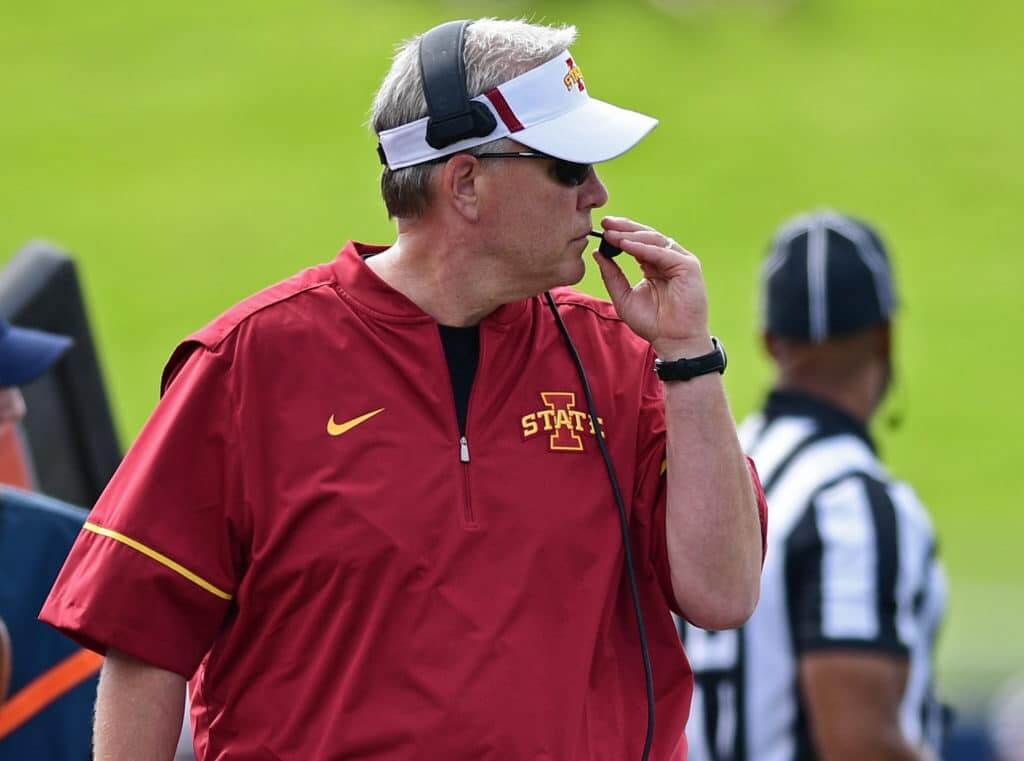
I’ll be upfront about something before diving in — there isn’t just one person by this name worth knowing about. A search for john heacock turns up several different people, including a well-known college football coach, along with private individuals who share the same name, some of whom have passed away and have obituaries indexed online. This article focuses on the person most people are actually looking for: Jon Heacock, the longtime college football defensive coordinator, since he’s the clearly documented public figure behind the vast majority of search interest in this name.
Quick Answer
John Heacock, more commonly spelled Jon Heacock in official records, is a retired American college football coach best known for his decade-long run as defensive coordinator at Iowa State University from 2016 through 2025, where he helped transform the Cyclones into one of the Big 12’s most consistently strong defensive programs. Before Iowa State, he spent over three decades coaching at programs including Youngstown State, Indiana, Michigan, Kent State, and Toledo, and he announced his retirement from coaching on December 23, 2025, closing out a 43-year coaching career.
What Jon Heacock Is Actually Known For
Heacock built his reputation primarily as a defensive strategist rather than a head coach, though he did hold that role earlier in his career at Youngstown State from 2001 to 2009, where he compiled a 60-44 record. His bigger, more lasting impact came later, particularly during his time as Iowa State’s defensive coordinator under head coach Matt Campbell, a partnership that lasted a full decade and produced some of the best defensive statistics in the program’s history.
He’s especially remembered for helping popularize a 3-3-5 defensive scheme that Iowa State debuted against Texas in 2017 — an unconventional alignment that other programs around the country began studying and imitating after it proved effective against high-powered Big 12 offenses. That single tactical shift is often cited as a turning point that helped Iowa State upset higher-ranked opponents and become a genuinely competitive defensive program in a conference known for offensive firepower.
How His Coaching Career Actually Unfolded
Heacock’s path through college football coaching spanned over four decades, built through a series of coordinator and assistant roles across multiple programs:
- Early coaching roles in the mid-1980s, including a state championship season at Steubenville High School and coordinator work at West Liberty University
- Graduate assistant work under Bo Schembechler at the University of Michigan from 1987 to 1989, a stretch that included two Big Ten titles and a Rose Bowl win
- A long relationship with Youngstown State, starting in 1991 under Jim Tressel, including a national championship in his first season as defensive backs coach
- A head coaching stint at Youngstown State from 2001 to 2009, following Tressel’s departure to Ohio State
- Coordinator roles at Indiana, Kent State, and Toledo through the 2010s, building a reputation as a defense-focused specialist
- A decade at Iowa State starting in 2016, culminating in his retirement announcement in December 2025
Across that span, he was recognized multiple times with Broyles Award nominations, an honor given to the top assistant coach in college football, receiving nominations in 2017, 2022, 2023, 2024, and 2025.
Main Career Highlights
- 60-44 record as head coach at Youngstown State from 2001 to 2009
- Multiple Gateway Conference titles and Coach of the Year honors during his Youngstown State tenure
- 72 career wins as an assistant coach at Iowa State, making him the winningest assistant in program history
- National championship as a defensive backs coach at Youngstown State in his very first season, 1991
- Multiple Broyles Award nominations, reflecting sustained recognition as one of the sport’s top assistant coaches
- Eight former defensive players reaching the NFL during his tenure at Iowa State
Strengths And Limitations Of His Coaching Legacy
Strengths:
- Longevity and adaptability across more than four decades of coaching, working under respected mentors like Bo Schembechler and Jim Tressel
- A reputation for humility and player-first coaching, frequently deflecting credit toward his players in interviews
- Genuine on-field innovation, particularly the 3-3-5 defensive scheme that influenced other programs nationally
- Strong developmental track record, producing multiple NFL-caliber defensive players during his Iowa State tenure
Limitations:
- His head coaching record at Youngstown State, while respectable, didn’t match the sustained success he later found purely as a coordinator
- Much of his broader recognition came relatively late in his career, largely tied to Iowa State’s rise under Matt Campbell rather than earlier stops
- As with most long-tenured assistant coaches, his legacy is closely tied to the head coaches he worked under, making it harder to separate his individual impact from broader program success
Real-World Examples And Career Impact
Iowa State’s defensive turnaround under Heacock is probably the clearest, most concrete example of his impact. Before his arrival, the program had allowed an average of at least 400 yards per game for ten consecutive seasons. Under his direction, that number dropped significantly, with Iowa State ranking among the Big 12’s best defenses across multiple seasons, including a conference-best finish in total defense in 2022.
The 2017 upset wins over then third-ranked Oklahoma and fourth-ranked TCU stand out as tangible proof of his scheme’s effectiveness, since both wins came against significantly more talented offensive rosters, largely on the strength of Iowa State’s defensive performance that season.
Legitimacy And Verifiable Career Record
Unlike many search terms that raise questions about authenticity, Heacock’s coaching career is thoroughly documented and easy to verify through multiple independent, reputable sources, including his official Iowa State Athletics coaching profile, Wikipedia, and sports recruiting databases like 247Sports and On3. His record, coaching stops, and accolades are consistently corroborated across these sources, which is a strong signal of legitimacy compared to some trending search terms tied to vaguer or unverifiable claims.
Anyone researching him for professional, journalistic, or historical purposes can reasonably rely on university athletics department records and established sports media coverage as credible primary sources.
Common Points Of Confusion
The most common issue researchers run into is name overlap. Several other people named John Heacock appear in public records and obituaries with no connection to the football coach, including private individuals who worked in unrelated fields entirely. It’s worth double-checking context — location, profession, and timeframe — before assuming any given mention refers to the football coach specifically, since the name isn’t unique to him.
There’s also some inconsistency in spelling across sources, with “Jon” being the more commonly used official spelling in his coaching records, while “John” appears more frequently in casual references and search behavior.
Comparison With Other Defensive Coordinators Of His Era
Compared to other long-tenured defensive coordinators in college football, Heacock’s career stands out for its sheer longevity and the relatively late-career peak he reached at Iowa State, a pattern that’s less common than coordinators who peak earlier and either retire or move into head coaching roles at bigger programs. Unlike some coordinators who chase head coaching opportunities aggressively, Heacock largely stayed in coordinator roles by choice during his later career, prioritizing scheme development over title advancement.
An Honest, Practical Take
Looking at his full career arc, what stands out most isn’t any single flashy statistic — it’s the consistency. Coaching for 43 years, across multiple programs and conferences, while still producing some of his best defensive units in his final decade, is a genuinely unusual career trajectory in a profession known for high turnover and burnout. His own comments about staying humble and crediting players reflect a coaching style that clearly resonated with the athletes he worked with, based on how consistently that theme comes up across interviews spanning different points in his career.
Final Verdict
John Heacock, formally known in coaching records as Jon Heacock, is a well-documented, legitimate figure in college football with a verifiable 43-year coaching career, highlighted by a decade of standout defensive coordination at Iowa State University. His legacy is best understood through his defensive scheme innovation, particularly the 3-3-5 alignment, and his consistent recognition through Broyles Award nominations across multiple seasons. Researchers should be mindful that the name is shared by several unrelated individuals, so confirming context remains important when researching him specifically.
Learn more about john heacock’s coaching career and legacy
FAQs
Q: Is John Heacock still coaching?
A: No. He announced his retirement from coaching on December 23, 2025, closing out a 43-year coaching career.
Q: What is John Heacock best known for?
A: He’s best known for his decade as Iowa State’s defensive coordinator, where he helped develop the 3-3-5 defensive scheme that influenced other college football programs nationally.
Q: Did John Heacock ever serve as a head coach?
A: Yes. He was the head football coach at Youngstown State University from 2001 to 2009, compiling a 60-44 record.
Q: How many Broyles Award nominations did he receive?
A: He was nominated for the Broyles Award, given to the top assistant coach in college football, in 2017, 2022, 2023, 2024, and 2025.
Q: Are all “John Heacock” search results about the same person?
A: No. Several unrelated individuals share this name, including private individuals featured in obituaries, so it’s important to confirm context before assuming a match to the football coach.
