

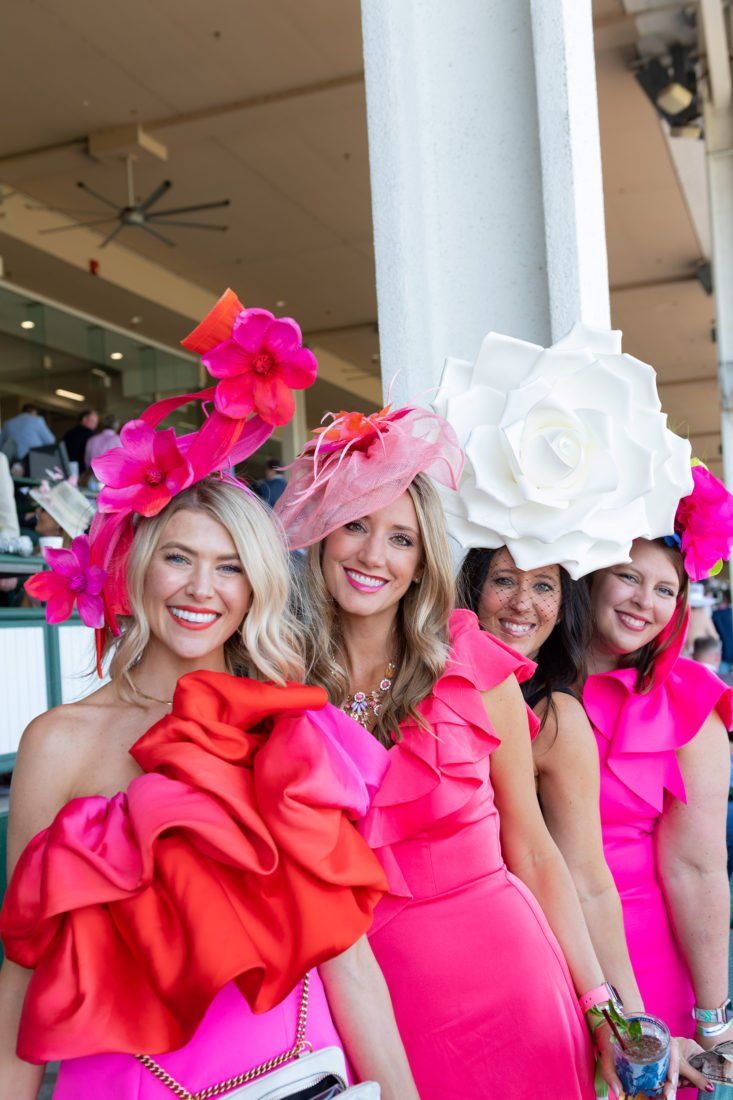
There’s something about the first Saturday in May that turns a horse race into a full-blown fashion event. If you’ve ever scrolled through photos from Churchill Downs and thought, how do people even decide what to wear to something like this? — you’re not alone. The Kentucky Derby is one of those rare occasions where the dress code is unwritten but universally understood, and getting it wrong feels oddly public.
This guide breaks down everything you actually need to know: the traditions, the hat rules, what’s changed in recent years, and whether any of it is worth the effort.
Quick Answer (For Featured Snippets)
Kentucky Derby fashion centers on bright, bold outfits paired with statement hats or fascinators. Women traditionally wear sundresses or pastel suits in florals or solids, while men opt for seersucker suits, linen blazers, or colored pants with bow ties. Hats are the defining element — the bigger and more creative, the better. The overall vibe is “Southern garden party meets high fashion,” though modern attendees have expanded it well beyond those origins.
What Is Kentucky Derby Fashion, Really?
The Kentucky Derby has been held at Churchill Downs in Louisville, Kentucky since 1875. What started as a regional thoroughbred race became one of America’s most-watched sporting events — and somewhere along the way, the fashion around it took on a life of its own.
The dress code isn’t enforced. Nobody turns you away at the gate for wearing the wrong thing. But the social expectation is strong enough that most attendees plan their outfits weeks or months in advance. It’s one of the few events in American life where showing up in something striking and overdressed is not just acceptable but actively encouraged.
The hat tradition, in particular, has roots in Southern etiquette and the idea that a proper lady wore a hat to formal outdoor occasions. That custom faded almost everywhere else but held firm at the Derby — and then evolved into something far more theatrical.
How the Fashion Works: What People Actually Wear
Women’s Outfits
The foundation is usually a dress or a suit in a bright color or bold print. Florals are enormously popular, but solid jewel tones — cobalt, emerald, coral, fuchsia — are just as common. Pastel shades work beautifully in spring light. Black is traditionally avoided, though that unwritten rule has softened over the years.
Length varies. Midi dresses are practical and photogenic. Mini dresses appear in the infield (the more casual, party-focused area inside the track). Maxi lengths can look stunning but require some coordination with the hat.
Fabric choices lean toward lightweight options that handle a warm May afternoon: cotton, linen, chiffon, organza. Nobody wants to be melting in polyester at a crowded outdoor venue.
Shoes matter more than people expect. The track grounds involve grass, gravel, and standing for long periods. Wedge heels or block heels are practical. Stilettos look great in photos taken at the beginning of the day and become a problem by afternoon.
The Hat
This is the centerpiece. A Kentucky Derby hat can be a simple wide-brim sunhat with a ribbon, or it can be a sculptural headpiece with feathers, flowers, netting, and structures that extend a foot or more in any direction.
A few things to know:
- Fascinators (the small clips or headbands with decorative elements) are acceptable but less traditional than a full hat
- Brim width is often a signifier of formality — wider brims read as more classic and dressed-up
- Color coordination matters more here than almost anywhere else; the hat and outfit should relate to each other, even if they don’t match exactly
- Millinery (custom hat-making) has a genuine craft tradition around the Derby; Louisville has local milliners who produce pieces specifically for the event
Some people commission custom hats months in advance. Others find something at a department store the week before. Both approaches can work depending on budget and intention.
Men’s Fashion
Men have more latitude than the dress code might suggest. The baseline is: a suit or blazer with trousers, dress shirt, and a tie or bow tie. Beyond that, the Derby actually encourages color and pattern that would be unusual at most formal events.
- Seersucker suits (the blue-and-white striped cotton fabric) are closely associated with Southern summer events and fit the Derby perfectly
- Linen blazers in cream, tan, or pale blue are practical and look the part
- Bright-colored trousers — mint green, coral, sunny yellow — paired with a contrasting blazer is a distinctly Derby look
- Bow ties read as more formal and event-appropriate than standard neckties for this occasion
- Men sometimes wear straw hats or flat caps, though there’s less expectation around it than for women
The most common mistake men make is showing up in a generic dark business suit. It’s not wrong exactly, but it misses the spirit of the event entirely.
Main Features of Derby Style
Bold color palettes. Neutrals exist at the Derby, but they’re rare. The default assumption is that you’ll bring color — and the more saturated, the better.
Statement headwear. The hat isn’t an accessory here; it’s often the focal point of the entire look. Decisions about hair, makeup, and outfit frequently get made around the hat.
Southern garden party aesthetic. There’s a recognizable visual language that blends Old South formality with spring garden party cheerfulness. It’s polished but not stiff.
Creative interpretation. Over the past decade especially, the Derby’s fashion scene has expanded to include more avant-garde looks, bold prints that go beyond traditional florals, and attendees who use the occasion to make genuinely artistic statements through clothing.
Practicality underneath it all. Despite appearances, most experienced Derby-goers have worked out the practical realities: comfortable shoes, weather-appropriate fabrics, outfits that can handle standing, crowds, and the possibility of afternoon rain.
Pros and Cons of Going All-In on Derby Fashion
What works in your favor:
- It’s one of the few occasions where genuine effort and creativity in dressing is rewarded socially
- The visual environment is spectacular; great photos are almost guaranteed if you’re dressed well
- Hat shopping and outfit planning has become its own enjoyable pre-event ritual for many attendees
- Local Louisville milliners and boutiques have genuine expertise to help you get it right
- The fashion tradition gives you a clear framework — there’s less confusion about what to wear than at most formal events
What to watch out for:
- Cost. A quality Derby hat can run anywhere from $50 to several hundred dollars. Custom millinery goes higher. Add a new dress or suit and you’re looking at a meaningful investment.
- Weather uncertainty. May in Louisville is unpredictable. Rain is genuinely common and a silk dress or a wide-brim hat can become impractical very quickly.
- Wearability after the event. A large statement hat has limited use cases beyond this one day. Some people find this freeing; others find it hard to justify.
- The infield vs. the grandstand divide. The infield is a very different environment — louder, more chaotic, with a younger crowd and more casual energy. The fashion expectations differ significantly between the two areas.
Real-World Examples and How People Approach It
Most first-time Derby attendees fall into one of a few patterns.
Some people treat it like a formal wedding and buy something new specifically for the event — dress, shoes, hat, the whole thing — and find the investment worthwhile for the experience.
Others raid their existing wardrobes, add a fascinator or hat they find online, and have a genuinely great time without spending much. The event is festive enough that enthusiasm counts for a lot.
A smaller group leans into the theatrical possibilities — commissioning or constructing elaborate hats, choosing outfits that could qualify as costumes, and essentially treating the day as a creative project. These are often the people whose photos circulate afterward.
For men who attend regularly, a good seersucker or linen suit becomes a worthwhile investment because it genuinely works across multiple summer occasions. A bow tie collection is easier to justify than custom headwear.
Legitimacy and Cultural Context
It’s worth acknowledging that Kentucky Derby fashion exists within a complicated history. The Derby itself has deep roots in Southern culture, and some of the aesthetics — the antebellum plantation house imagery, the old-money signifiers — carry historical weight that’s worth being thoughtful about.
The fashion around the event has genuinely evolved. The attendee base is more diverse than it was even a decade ago, the aesthetic interpretations are broader, and the conversation about what “Derby fashion” means has expanded accordingly. You’ll see contemporary designers and streetwear-influenced looks alongside traditional Southern styles.
The event is legitimate in the sense that it’s been happening since the 19th century and the fashion culture around it is real, community-driven, and enthusiastically participated in by people who genuinely love the pageantry of it.
Common Mistakes and Limitations
Prioritizing photos over practicality. It sounds obvious but the people who have the best time are usually the ones who can actually move around, stay comfortable for six or eight hours, and aren’t miserable by mid-afternoon because of their shoes.
Ignoring the weather forecast. Checking the Louisville forecast in the week before the event and having a backup plan (a light jacket, a hat with some structural integrity in case of wind) is genuinely useful.
Leaving hat coordination too late. If you want something custom or specific, the last week before the Derby is too late. Good milliners book up. Online inventory sells out.
Overdressing for the infield. If you’re going to the infield specifically, very formal attire is practical overkill. The environment is more like a festival than a formal occasion.
How Derby Fashion Compares to Other Major Racing Events
The Kentucky Derby isn’t the only race event with a fashion culture.
Royal Ascot in England has a strictly enforced dress code — hats are mandatory in certain enclosures, and there are specific rules about straps, hems, and formality. The fashion is more formal and structured, with real consequences for non-compliance. The Derby is more free-form.
The Melbourne Cup in Australia operates similarly to the Derby — elaborate hats, bright colors, competitive fashion — and in some ways has pushed even further into theatrical territory.
Preakness Stakes and Belmont Stakes (the other two legs of the Triple Crown) attract fashion-conscious attendees but at a lower intensity than the Derby specifically. The Derby carries more cultural weight in the fashion context.
The difference is that Kentucky Derby fashion is simultaneously more democratic (no rules are technically enforced) and more culturally specific to American Southern aesthetics. It’s evolved in its own direction rather than following British racing traditions.
Practical Opinion: Is It Worth the Effort?
Genuinely, yes — if you’re attending.
The Derby is one of the few remaining events in American life where dressing up has a real social payoff and where the effort is matched by the environment. The atmosphere at Churchill Downs on race day is unlike almost anything else — there are tens of thousands of people, nearly all of whom have made an effort with their appearance, and the collective visual effect is remarkable.
That said, it’s worth calibrating the effort to your actual situation. If you’re spending significant money on an outfit that doesn’t fit your budget, or stressing about finding the “perfect” hat the week before, you’ve probably lost the plot a little. The goal is to show up looking festive and put-together, not to win a fashion competition.
The hat tradition is worth leaning into even if you go modest — a $40 wide-brim hat with a ribbon still fits the occasion better than no hat at all. It’s the spirit of the thing.
Final Verdict
Kentucky Derby fashion is a genuine tradition with real aesthetic depth, a history worth understanding, and plenty of room for personal interpretation. The basics are accessible — bright colors, a dress or suit, some form of headwear — and the upper end of commitment (custom hats, designer looks, creative statements) is as high as anyone wants to take it.
It rewards effort without punishing restraint. It’s the kind of dress code that’s easy to get approximately right and difficult to get exactly wrong.
If you’re going, dress up. Wear a hat. Pick a color you actually like. The rest mostly takes care of itself.
Discover the ultimate guide to kentucky derby fashion
FAQs
Q: Is a hat required at the Kentucky Derby?
A: Not technically — there’s no enforced dress code. But hats are so central to the event’s culture that most attendees wear one. Showing up without any headwear is unusual enough that you’ll likely feel out of place. A fascinator or a simple wide-brim hat is a reasonable minimum.
Q: What colors should you avoid wearing to the Derby?
A: Black is traditionally considered bad luck at the Derby, though this “rule” has relaxed considerably in recent years. White has similar associations for some attendees. In practice, people wear both and there are no consequences — but if you want to honor tradition, opt for color.
Q: How much should I budget for a Derby outfit?
A: A reasonable complete outfit — dress or suit, shoes, and a hat — can come together for $150–$300 if you shop carefully. Custom millinery and designer dresses push costs significantly higher. There’s no floor or ceiling; the event accommodates a wide range of budgets.
Q: Can men wear hats to the Kentucky Derby?
A: Yes, though it’s optional. Straw fedoras, flat caps, and Panama hats all work well. Men’s headwear is appreciated but not expected the way women’s is.
Q: What is the difference between a fascinator and a Derby hat?
A: A fascinator is a small decorative headpiece attached with a clip or headband, typically featuring feathers, flowers, netting, or sculptural elements. A Derby hat is usually a full hat with a structured crown and brim. Both are appropriate for the event, but traditional Derby fashion leans toward a hat with some actual brim width.
Q: When should I start shopping for a Kentucky Derby outfit?
A: Ideally 4–8 weeks before the event if you want good selection. Custom hats should be commissioned even earlier — good local milliners in Louisville can book up 2–3 months in advance. Last-minute shopping is possible but limits your options significantly.
Q: Is Kentucky Derby fashion only for people at the event?
A: Not at all. Derby watch parties are common across the country, and many hosts encourage themed dressing. The fashion culture has spread well beyond Churchill Downs to anyone who wants to celebrate the occasion.
